
Posts by reachchurch

Divine Encounter
Read This Week: Genesis 28
Jacob left Beersheba and set out for Harran. When he reached a certain place, he stopped for the night because the sun had set. Taking one of the stones there, he put it under his head and lay down to sleep. He had a dream in which he saw a stairway resting on the earth, with its top reaching to heaven, and the angels of God were ascending and descending on it. There above it stood the Lord, and he said: “I am the Lord, the God of your father Abraham and the God of Isaac. I will give you and your descendants the land on which you are lying. – Genesis 28:10-13 NIV
Kairos is a Greek word that means “the right, critical, or opportune moment.” It is one of two words the ancient Greeks had for time, the other being Chronos. Whereas the latter refers to chronological or sequential time, Kairos signifies a specific, proper, or opportune time for action or a divine encounter. In this sense, while Chronos is quantitative, Kairos has a qualitative, permanent nature. In this section of Genesis 28, we find Jacob on a physical and spiritual journey, and he has a dream and moment that will shape the rest of his life. Many people refer to this passage as Jacob’s ladder or an illustration of the significant divine connection between God and his covenant people, specifically Jacob’s family. Jacob’s ladder is his kairos moment, where something unexpected and extraordinary happens.
Having left Beersheba at this point, Jacob is at a crucial juncture in his walk, and God chooses this moment to reveal Himself to him in a profound way. His departure from Beersheba to Harran comes after some challenging circumstances in his family, specifically with his brother, Esau. But it also takes place after his father, Isaac, blesses him and asks God to make him fruitful and increase his numbers until he becomes a community of people (v.3). As he sets out, this blessing and the choices he makes set the stage for the kairos moment and divine encounter at Bethel and becomes kind of a metaphor for Jacob’s life.
When Jacob gets to Harran, the Bible says that he reached a certain place, stopped for the night, and fell asleep (v.11). He then had a dream, and in this dream, he witnessed a divine revelation. He saw a stairway or ladder resting on the earth, with its top reaching heaven and the angels of God going up and down on it. The image of a ladder connecting heaven and earth is as beautiful as it is incredible. The angels ascending and descending symbolize the communication or connection between God and the earth and His continued willingness to have a relationship with His people. God’s presence is tangible, and the dream carries a promise when the Lord tells him that He is the God of Abraham and the God of Isaac and that He will give Jacob and his descendants the land on which he was lying (v.13).
This revelation of the covenant land will be the inheritance for Jacob’s descendants and points to God’s commitment to the promise with Abraham and Isaac. Upon waking, Jacob recognizes the place’s sacredness and acknowledges the Lord’s presence. His reaction reflects a profound spiritual awakening. By consecrating the stone he used as a pillow, Jacob is committed to setting this encounter apart as holy. This transformation in perspective and reverence marks a turning point in Jacob’s relationship with God. He responds to the divine pronouncement with a vow. He sets conditions, seeking God’s protection, provision, and guidance. This vow reveals Jacob’s growing awareness of God’s role in his life and his desire for a reciprocal relationship.
We have similar kairos moments and divine encounters. The God of the universe, by His good pleasure, through His son Jesus and the power of His Holy Spirit, chooses to reveal Himself to us. He speaks to us through His word and other ways that make us aware of His presence and orient us again to His power and provision. Like Jacob, our divine encounters also point us back to God’s truth and promises that are real, relevant, and effective for our lives. These kairos moments also inspire our hearts to deepen our relationship with God through Christ and come near to Him. Genesis 28 is a narrative of divine encounter, transformation, and commitment that should have us joyfully anticipating the special moments with God in our lives.
Family Matters
Read This Week: Genesis 27
After Isaac finished blessing him, and Jacob had scarcely left his father’s presence, his brother Esau came in from hunting. He too prepared some tasty food and brought it to his father. Then he said to him, “My father, please sit up and eat some of my game, so that you may give me your blessing.” His father Isaac asked him, “Who are you?” – Genesis 27:30-32 NIV
Genesis 27 centers on another intriguing story involving the brothers Jacob and Esau. We’ve already seen them embroiled in sibling rivalry, deception, and tampering with the blessings God has given their family. This section again delves into the complexities of their family dynamics, another instance of misdirection and deception, and God’s providence. It is a story that everyone reading it can relate to in some way. Family matters can be tricky, and even the healthiest of families are not immune to relational issues, tension, and sinful choices that can affect everyone.
This chapter demonstrates that family challenges take on greater importance because the stakes are higher and the bonds run deep, which can hurt more when things go south. It revolves around an event where Isaac, who is old and blind, intends to bless Esau before his death. However, Rebekah overhears the plan and devises a scheme to secure the blessing for Jacob, her favorite son. She dresses Jacob in Esau’s clothes and covers his hands and neck with goat skins to mimic Esau’s hairy appearance. Jacob receives the blessing intended for Esau when he presents himself to Isaac.
There are many issues here, and they raise ethical questions about deception and the consequences of favoritism within families. But in the middle of it all is the ever-present concept of divine providence, as the blessing received by Jacob aligns with God’s plan for him to be the chosen one through whom the covenant with Abraham will continue. Only God could enact His perfect and sovereign design amid human beings’ flawed and sinful activities. His plan transcends human scheming and poor choices, and He orchestrates events to fulfill His larger vision despite the imperfect actions of individuals and complicated family matters.
As He does in our lives and our world daily, the Lord extracts His glory and accomplishes His will even when it looks improbable. The situation in Isaac’s family is not good. His one son and wife deceive him; his other son misses the blessing intended for him at no fault of his own, putting all of them at odds and resulting in hostility, fear, and a desire for revenge. But all of it cannot overcome the redeeming power of God. Although it looks bleak throughout this section, it sets the stage for the unfolding of Jacob’s journey and the eventual reconciliation with Esau. It also expresses once again that the Lord is faithful even when we are not and that He will help us navigate the stickiest of situations if we trust Him and His word.
May we read this chapter and consider the themes of forgiveness, redemption, and the transformative power of grace. We can relate these to our own lives and reflect on how God has intervened and brought about positive outcomes in our family matters, relationships, and activities when the circumstances seemed irreconcilable and antagonistic. By delving into the intricacies of Jacob and Esau’s story, we gain valuable insights into the human condition and the overarching goodness and faithfulness of God.

A Beautiful Dilemma
Read This Week: Genesis 26
Now there was a famine in the land and Isaac went to Abimelek king of the Philistines in Gerar. The Lord appeared to Isaac and said, “Do not go down to Egypt; live in the land where I tell you to live. Stay in this land for a while, and I will be with you and will bless you. For to you and your descendants I will give all these lands and will confirm the oath I swore to your father Abraham. – Genesis 26:1-3 NIV
Ethical and moral dilemmas are always present for the patriarchs and their families in Genesis. In this chapter, the same choice and scenario confronts Isaac that had previously tested Abraham. Unfortunately, he fares no better in handling it than his dad did before him. The section begins with a famine in the land, also mirroring a similar situation faced by Abraham. But instead of following the conventional path of seeking refuge elsewhere, Isaac demonstrates a submissive faith by obeying God’s command to stay in the land of Gerar. This decision sets the stage for a story of a sinful choice, trust, and reliance on the Lord’s providence.
In Gerar, Isaac faces challenges similar to those encountered by Abraham. Fearing for his life, he introduces his wife, Rebekah, as his sister to King Abimelek. Despite this, God reaffirms the covenant made with Abraham, emphasizing the continuity and steadfastness of His promises across generations. We see over and over again that God is both sovereign and a faithful initiator of His covenant. This divine reliability is a theme woven throughout the biblical narrative and is present (and sometimes more so) even when we are regularly sinful and inconsistent. The Lord honors His promise despite Isaac lying about the identity of his wife.
But Isaac rallies after his lie is exposed. He has already trusted God to stay in Gerar, and now he responds with faith and resolve in the face of opposition and conflict, particularly over wells dug by his father. Despite dealing with this hostility from the land’s inhabitants, he remains firm and persistent in securing resources for his people. We can find inspiration in this over the hope of second chances and the ability to experience redemption but also to persevere in the face of adversity, trusting that God’s promises will always prevail.
The beautiful thing about this passage is as Isaac perseveres, God blesses him abundantly. The wells he digs not only provide water but become symbols of prosperity and peace. This act mirrors the principle that obeying God’s word leads to blessings beyond measure. Isaac’s journey becomes a testament to the faithfulness of God in rewarding those who trust and follow His guidance. As an illustration of this, the chapter concludes with a surprising turn of events. Isaac and Abimelech, recognizing God’s favor upon Isaac, make a covenant of peace.
This reconciliation highlights the transformative power of God’s blessings, turning potential conflicts into opportunities for unity and cooperation. This humble striving for agreement and harmony is needed now more than ever, not only in the world but also in the Christian community. It is a beautiful dilemma or the extraction of God’s glory from things that seem negative on the surface. Father God does this a lot for us.

Divine Purpose
Read This Week: Genesis 25
Abraham lived a hundred and seventy-five years. Then Abraham breathed his last and died at a good old age, an old man and full of years, and he was gathered to his people. His sons Isaac and Ishmael buried him in the cave of Machpelah near Mamre, in the field of Ephron, son of Zohar the Hittite, the field Abraham had bought from the Hittites. There, Abraham was buried with his wife Sarah. After Abraham’s death, God blessed his son Isaac, who then lived near Beer Lahai Roi. – Genesis 25:7-11 NIV
Genesis 25 introduces us to another milestone in the narrative of first things and God’s covenant with His people. It is an essential chapter in the Bible that shapes history and carries significant theological implications. Even though it begins with the death of Abraham, the patriarch, the section revolves around the life of Isaac, his family, and the events that set the stage for those who followed. What also stands out is how the sovereign plan of God cannot be stopped or interrupted by the failures and brokenness of people. His divine purpose has never been subjected to or hindered by the faults and shortcomings of the finite.
The chapter begins with the birth of Isaac’s twin sons, Esau and Jacob. A stark contrast in character and appearance marks their entrance into the world. Esau, the elder, is described as a skillful hunter, a man of the field, while Jacob is portrayed as a quiet and mild-mannered dweller of tents. Even in their infancy, the stage is set for the complexities and dynamics between these two. Things take a dramatic turn when Esau, exhausted and hungry from a day of hunting, comes to Jacob and implores him to share his stew. In a moment of opportunism, Jacob seizes the opportunity and negotiates the exchange of Esau’s birthright for soup.
The focus then shifts to the aging Isaac, who is nearing the end of his life. His eyesight is failing, and he wishes to bless his firstborn, Esau. However, Rebekah, having received a divine oracle during her pregnancy, knows that the blessing is destined for Jacob. With careful planning and deception, Jacob, disguised as Esau, receives the blessing meant for the elder son. This sets the stage for familial tension, a fractured relationship between the brothers, and the shockwaves it sent through the generations.
While these circumstances may seem driven by human choices and deceit, a deeper layer reveals the divine purpose. The fulfillment of the prophecy given to Rebekah during her pregnancy, the selection of Jacob as the chosen vessel for the Abrahamic covenant, and the subsequent shaping of the Israelite lineage are all part of God’s sovereign plan. It was His divine purpose. This means we must not mistake the brokenness we find in ourselves and others as something that is immune to the Savior’s influence. Instead, we should think of our sinful hearts as potential places of transformation where God might work to reclaim and repurpose our fallenness for His glory. Just like He did here.
It is humbling to see how the Lord works despite human frailty, poor choices, and familial strife. His divine intervention in these broken lays the groundwork for the larger narrative of God’s covenant with His chosen people. As we reflect on the stories of Esau and Jacob, birthright and blessings, we find timeless lessons about the consequences of impulsive actions, the importance of foresight, and the overarching providence of God not only in the annals of history but in our daily lives. If God can use the bad guy to save His people, how much more will He use flawed followers of Christ for His divine purposes?
Timeless
Read This Week: Luke 2
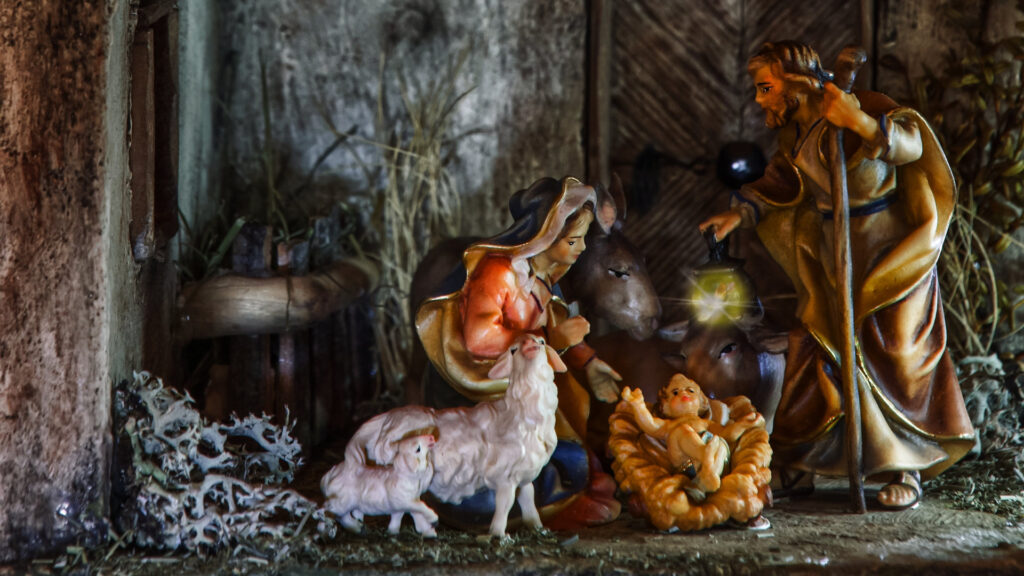
So Joseph also went up from Nazareth in Galilee to Judea, to Bethlehem, the town of David, because he belonged to the house and line of David. He went there to register with Mary, who was pledged to be married to him and was expecting a child. While they were there, the time came for the baby to be born, and she gave birth to her firstborn, a son. She wrapped him in clothes and placed him in a manger because no guest room was available for them. Luke 2:4-7 NIV
It’s that time of year again when the world pauses and engages in Christmas festivities, traditions, and celebrations. People worldwide will play music, attend parties, buy and wrap packages, exchange gifts, and even participate in religious gatherings. But this time of the year is also a moment when the name of Jesus Christ is impressed upon the world’s consciousness: his story, his divinity, and his ever-present importance to all humankind. This season points again to the timeless and transcendent message of Christ and his birth that holds a significance that cannot be lessened by time or the retelling of it.
In the annals of the New Testament, Luke 2 stands out in this radiant and timeless narrative that weaves together the essence of hope, redemption, and the miraculous. It is a pivotal chapter in the Gospels that unveils this profound story and offers us and everyone who hears it a glimpse into the divine orchestration of a world-changing event. It opens with the decree of Caesar Augustus, the Roman emperor, ordering a census that required everyone to return to their ancestral towns. Against this historical backdrop, we find Joseph and a pregnant Mary embarking on a journey to Bethlehem, Joseph’s city. The humble setting of a stable in this forgotten town would become the stage for one of the most transformative moments in history.
As Mary and Joseph arrive in Bethlehem, we witness the simplicity and humility surrounding the birth of Jesus. The Son of God, the long-awaited Messiah, is born not in a palace or amidst grandeur but in a lowly manger. This choice of where the baby is born is a powerful testament to God’s preference for the meek and the humble, emphasizing the message of salvation being available to everyone. In Luke 2:8-20, we see the angelic proclamation to a group of shepherds in the fields. The announcement of the birth of Jesus is accompanied by a heavenly host praising God, and the shepherds are compelled to seek out the newborn Savior. Those on the margins of society see this divine revelation, underscoring the same inclusive nature of the gospel message.
This chapter also recounts the presentation of the baby Jesus at the temple in Jerusalem. Here, Simeon, a devout and righteous man, recognizes the child as fulfilling God’s promise to bring salvation to Israel and the Gentiles. It emphasizes the comprehensive scope of God’s redemptive plan, extending beyond ethnic and cultural boundaries. It is timeless and for all who will call on the name of the Lord.
In an ever-changing world and social landscape, the Christmas story rises above as an everlasting beacon of hope that illuminates the transformative power of Christ. It invites us to contemplate the profound mystery of the Incarnation, where the divine intersects with the ordinary, and to not see it as merely a historical event but an eternal proclamation of God’s love, grace, and redemption for all of humanity. It never gets old, becomes just a rehearsed story once a year, and always retains its power to captivate and save. It is timeless.

Love at First Sight
Read This Week: Genesis 24
Then he prayed, “Lord, God of my master Abraham, make me successful today, and show kindness to my master Abraham. See, I am standing beside this spring, and the daughters of the townspeople are coming out to draw water. May it be that when I say to a young woman, ‘Please let down your jar that I may have a drink,’ and she says, ‘Drink, and I’ll water your camels too’—let her be the one you have chosen for your servant Isaac. By this, I will know that you have shown kindness to my master.” Before he had finished praying, Rebekah came out with her jar on her shoulder. She was the daughter of Bethuel, son of Milkah, who was the wife of Abraham’s brother Nahor. – Genesis 24:12-15 NIV
“Love at first sight” is a phrase that has been around for generations. It describes the instant attraction and connection between two people or on the part of just one person. But is it real? Do people see each other and, in a moment, know they are meant to be? A lot of evidence suggests that they do. Countless stories are told about people experiencing love at first sight or a pull or attraction that makes someone open to the possibilities of a relationship without knowing someone. A similar narrative (with a bit of a different twist) is found in Genesis 24, where Abraham’s servant embarks on a quest to find a suitable wife for Isaac. This blog post delves into the key themes and lessons woven into the fabric of Genesis 24, shedding light on the significance of spiritual guidance and faithful obedience.
In life’s complex ups and downs, decisions about relationships, especially long-term ones, are among the most significant. This chapter is a beautiful testament to the importance of seeking God’s wisdom and guidance regarding who we are in a relationship with. Whether it is a friendship, a marriage, or other connections, we should ask the Lord to give us discernment and sound judgment to choose wisely. This approach is what Abraham takes regarding his son’s future mate. He is conscious of the covenant with God and sends his trusted servant on a mission, committing the process to God’s sovereignty and divine intervention. It shows us that we should also approach big decisions in life and at various crossroads with prayer and a reliance on God’s guidance, recognizing that His plan far surpasses our own.
Eliezer’s prayer beside the well is a poignant moment in the section, illustrating the power of communication with the Lord about practical and essential decisions in life, especially ones involving love and lasting commitment. Verses 12-14 say:
“Lord, God of my master Abraham, make me successful today and show kindness to my master Abraham. See, I am standing beside this spring, and the daughters of the townspeople are coming out to draw water. May it be that when I say to a young woman, ‘Please let down your jar that I may have a drink,’ and she says, ‘Drink, and I’ll water your camels too’—let her be the one you have chosen for your servant Isaac. By this, I will know that you have shown kindness to my master.”
The presence of the sign involving a specific response from the chosen woman showcases the delicate balance between faith and action. It prompts reflection on our lives — the moments when we’ve sought the Holy Spirit’s and the Bible’s guidance to light and affirm our paths. This part of the chapter encourages us to cultivate a prayerful heart, attentive to the truths and signs that may illuminate our journeys. Rebekah was hospitable, beautiful, and willing to tend to the needs of others. Still, she was not love at first sight to Eliezer because she was pretty, available, or kind, but because he sought the Lord to show him and make him see the one He would provide for Isaac.
Both Abraham and Eliezer exemplify faithful obedience to God’s commands that we should exude. Abraham’s charge to find a wife from his own people and Eliezer’s meticulous execution showcase a commitment to following God’s will no matter what. Their example challenges us to be obedient to the divine call in our lives, even when the path seems uncertain. It underscores that faithfulness to God’s commands is a key to unlocking His blessings. As we navigate our lives, they inspire us to seek divine direction, look for the Holy Spirit’s movement, and embrace faithful obedience to God’s word. In doing so, we can discover our own love stories unfolding in unexpected and beautiful ways, guided by the hand of God.

Grief Observed
Read This Week: Genesis 23
Sarah lived to be a hundred and twenty-seven years old. She died at Kiriath Arba (that is, Hebron) in the land of Canaan, and Abraham went to mourn for Sarah and to weep over her. – Genesis 23:1-2 NIV
In his book, A Grief Observed, C.S. Lewis wrote, “We were promised sufferings. They were part of the program. We were even told, ‘Blessed are they that mourn,’ and I accept it. I’ve got nothing that I hadn’t bargained for. Of course, it is different when the thing happens to oneself, not others, and in reality, not thoughts.” These words are indeed true. We know loss is part of life, and we realize that we haven’t found a way to cheat death, but when we are confronted with losing someone near and dear to us, the knowledge that death is inevitable never outweighs the pain when it happens. The confrontation with the reality of death came for Abraham even though he had experienced loss before. But this one hit much differently, much more profound. It was Sarah.
Abraham’s loss of his beloved wife in chapter 23 is a pivotal moment in his life, shedding light on human emotions and the fulfillment of divine promises. It weaves a poignant narrative that explores grief and the enduring legacy of faith. The section begins with her passing at 127. Abraham’s grief is palpable, offering us a glimpse into the depth of their relationship, connection, and the universal experience of loss, as Lewis wrote about. In this passage, we relate to and witness the humanity of this giant biblical figure and spiritual patriarch. Reading verses 1-3 evokes a visceral reaction and is felt by anyone who has mourned or said goodbye to a loved one. It reminds us that even those trusted by God and marked by great faith are not exempt from the pain of farewell. When it says that Abraham wept over her and laid beside her after she died, we are moved by the authenticity of the moment.
Abraham’s next steps are unexpected yet profound. Instead of seeking solace in his grief, he turns his attention to securing a proper resting place for Sarah. This leads to a fascinating negotiation with the Hittites, revealing the cultural norms of the time and emphasizing the importance of honoring the deceased. Abraham’s insistence on purchasing the cave of Machpelah rather than accepting it as a gift is a noteworthy decision. It speaks to the value of ownership and the recognition that the promises of God are not just for the present generation but are intended to be tangible, lasting legacies for those who follow.
Beyond the cultural insights, this chapter solidifies the connection between Abraham’s family and the Promised Land. Purchasing the burial site isn’t merely a transaction; it is a symbolic claim on the land God promised Abraham and his descendants. He ensures a dignified resting place for Sarah and stakes a claim to fulfilling God’s covenant. Verses 19-20 say that Abraham buried his wife Sarah in the cave in Machpelah field near Mamre (at Hebron) in Canaan. So, the field and the cave in it were deeded to Abraham by the Hittites.
Genesis 23 gives us so many lessons that are relevant to our lives today. The themes of grief, negotiation, and legacy-building are as applicable today as they were in the time of Abraham. We are reminded of the importance of honoring our loved ones, navigating cultural practices with wisdom, and understanding that our actions today contribute to a legacy that extends beyond our lifetime. It combines the threads of sorrow, cultural nuance, and divine promise. It challenges us to observe grief and reflect on our own approach to loss, the legacies we are building, and the significance of the truths we hold dear. We find a profound exploration of faith, love, and the enduring impact of a life lived in pursuit of God’s promises.

Bond of Faith
Read This Week: Genesis 22
Abraham looked up, and there in a thicket, he saw a ram caught by its horns. He went over and took the ram and sacrificed it as a burnt offering instead of his son. So Abraham called that place The Lord Will Provide. And to this day, it is said, “On the mountain of the Lord it will be provided.” The angel of the Lord called to Abraham from heaven a second time and said, “I swear by myself, declares the Lord, that because you have done this and have not withheld your son, your only son, I will surely bless you and make your descendants as numerous as the stars in the sky and as the sand on the seashore.” – Genesis 22:13-18 NIV
As we have already discussed, Genesis is full of stories that people who claim no affiliation with Christianity or Judaism know. Chapter 22 presents us with another one of those, the account of Abraham being asked by God to sacrifice his son, Isaac. It is a pivotal narrative in this study of Genesis and the Bible. It is a gripping and agonizing story that captures a father’s willingness to sacrifice his son in obedience to God’s command. Sounds familiar to another story in Scripture, doesn’t it? This chapter is also deep in its significance to the covenant God made with Abraham which some refer to in the Hebrew as Akedah, which means “binding or a bond.” It is a bond of promise and faith.
The section begins with God testing Abraham by instructing him to take Isaac to the region of Moriah and offer him as a burnt offering. Despite this command’s profound emotional and moral challenges, Abraham demonstrates unwavering faith and obedience. Early the next morning, he sets out with Isaac, two servants, and the necessary provisions for the sacrifice. Verse 3 says:
Early the next morning Abraham got up and loaded his donkey. He took with him two of his servants and his son Isaac. When he had cut enough wood for the burnt offering, he set out for the place God had told him.
Upon reaching the designated place, Abraham builds an altar and arranges the wood for the offering. As he prepares to sacrifice Isaac, an angel of the Lord intervenes, calling out to Abraham and preventing him from harming his son. The angel commends Abraham for his obedience and then Abraham looked up and there in a thicket he saw a ram caught by its horns. He went over and took the ram and sacrificed it as a burnt offering instead of his son (v.13).
Yes, the central theme here revolves around the testing of Abraham’s faith, but it also highlights the Akedah, or the bond of faith rooted in his covenant with God. Abraham trusts God and believes in his promises; he sees them as binding, most especially the promise of his son, Isaac. So when God’s command challenges the very core of Abraham’s relationship with Him, his bond of faith allows him to surrender to the God’s will, no matter the request or outcome. This unimaginable test produced lasting trust in their bond and would reveal the faith God had established and developed in Abraham. He was finally ready to trust the Lord with everything.
Abraham’s unquestioning obedience and trust in God’s plan stand out. Despite not understanding the reasons behind the Lord’s decree, he remains faithful, believing that God will keep and fulfill His promises in His way. And just like God always comes through for us and upholds his promises at crucial moments in our lives, He provides a ram for sacrifice, sparing Isaac’s life. This event emphasizes God’s bond of faithfulness and provision. It reiterates that the Father will always provide for those who trust and obey Him.
This chapter challenges us to reflect on our own faith and obedience to God. It prompts questions about the extent of our commitment to Christ and the willingness to surrender everything, even the most precious aspects of life, to follow Jesus. This story of Abraham and the bond of faith also encourages us to trust in God’s sovereignty, even in the midst of challenging and seemingly impossible situations.

The Parentheses
Read This Week: Genesis 21
Now, the Lord was gracious to Sarah as he had said, and he did what he promised for Sarah. Sarah became pregnant and bore a son to Abraham in his old age, at the time God had promised him. Abraham gave the name Isaac to the son Sarah bore him. When his son Isaac was eight days old, Abraham circumcised him, as God commanded him. Abraham was a hundred years old when Isaac was born. – Genesis 21:1-5 NIV
Waiting is so hard. No matter how patient or longsuffering, waiting for something we have been promised is never easy. It can test and challenge the most forbearing and tolerant of people. To wait on something is to be confronted with the reality of having expectations and then not knowing when they will be met. Any way you slice it, it is not effortless for us as imperfect human beings to wait, and it can test our faith in ways we can’t prepare for. It has been said that the “Christian life would be much easier if the time between when you first appeal to God’s promises and when you receive what he promised were short.” This saying is indeed true, but with God’s help, we can live victoriously in the waiting.
Abraham and Sarah knew what it was like to wait. God had promised them a son in their old age, and it took 25 years for this promise to come to pass. Imagine being told that you will experience the joy, fulfillment, and satisfaction of a child and then waiting a quarter of a century before it happens. But God’s promises never fail, no matter how long we are called to wait on them. Verses 1-2 say that the Lord was gracious to Sarah as he had said, and he did what he promised for Sarah. Sarah became pregnant and bore a son to Abraham.
This miracle promise of a child was not fulfilled because Abraham or Sarah was perfect in their obedience; they were far from it (as we saw in the last chapter). The promise of Isaac was accomplished because God was faithful to His Word. Some promises of God are conditional and depend on something we are called to do. Other promises of God are unconditional, and He fulfills them not because of what we do but because of who He is. The Lord can’t be anything other than a faithful promise keeper, so we just have to learn to live and trust him in the time we have to wait for them to be fulfilled.
This is enlightening for us. As we have seen with Abraham and Sarah, life with God, or life in general, is not easy. It wasn’t intended to be. That isn’t one of the promises. But, the promises of God that we do know are real, true, and eternal and possess an endless capacity for our lives. A capacity that can provide a son for a one hundred-year-old man and his wife. The knowledge that those types of promises exist is not the problem. It’s what happens in the middle: the parentheses of time between the awareness of what is promised and its realization. It’s the parentheses of promise that gives us such trouble. It challenges us to believe. To believe not in ourselves, our capabilities, or the strength of anything on earth, but in the power of Almighty God while we linger in the parentheses.
Ironically, it is in the parentheses that our faith is increased, our mettle tested, our resolve set, and our lives sanctified. The parentheses are where we become the people God desires us to be. It’s here that we cling to and cry out for those promises. It’s here that we wait and endure. It’s in the parentheses that we anticipate a moment of fulfillment and the surprise of joy that we can’t predict. And even if it never comes, it’s here that we keep going because we have the hope of the promise. It’s not easy. It’s not fast. But with God and His Son, Jesus Christ, in the parentheses, it’s always promising.

The Same Mistake
Read This Week: Genesis 20
Now Abraham moved on from there into the region of the Negev and lived between Kadesh and Shur. For a while he stayed in Gerar, and there Abraham said of his wife Sarah, “She is my sister.” Then Abimelek king of Gerar sent for Sarah and took her. – Genesis 20:1-2 NIV
It is often easy for us to assess someone else’s situation, mistake, or the reasoning behind why they did something and critique it objectively and retrospectively. It is convenient to put ourselves into the moments of others when they face a decision or a challenging instance and offer commentary about what they should have done or how they should have reacted. We can be a people of unrelenting critique, keen hindsight, and timeless wisdom just as long as we’re not the ones under the microscope. However, the key to analyzing the movements and behavior of other people and our own is not to adjudicate or condemn but to learn from it.
In Genesis 20, we see Abraham in a situation that is familiar to him. It is a very similar set of circumstances to Genesis 12. After the destruction of Sodom and Gomorrah, Abraham moved. Verses 1-2 tell us that Abraham moved into the region of the Negev and lived between Kadesh and Shur. For a while, he stayed in Gerar. While in this area, the King of Gerar, Abimelek, thinks that Sarah is Abraham’s sister because that is what he is told, takes her, and seeks to have relations with her.
During that night, God comes to Abimelek, who is not a believer in Yahweh, and tells him that by doing what he did toward Sarah, he doomed his people and himself to destruction. But Abimelek pleads with God, says that he did not know Sarah was married, and asks Him to spare his people and country. The Lord then says to him in verses 6-7:
Yes, I know you did this with a clear conscience, and so I have kept you from sinning against me. That is why I did not let you touch her. Now return the man’s wife, for he is a prophet, and he will pray for you, and you will live. But if you do not return her, you may be sure that you and all who belong to you will die.
Unfortunately, Abraham didn’t learn from the mistake and lie he told in Genesis 12. This account of his life shows us how easy it is to fall back into sin and bad habits. Abraham messed up in an area that he had struggled in before. Instead of trusting God and His sovereignty to keep his family together, he came up with his own plan. A plan that he tried one other time and a plan that failed completely then and did again. It was the same mistake. The same mistake that nearly cost an entire nation their lives and vitality.
We can relate to Abraham here. We also have propensities and tendencies to slip back into bad habits and repeat mistakes that we should have learned from. A lot of times, it comes about the same way as it did for Abraham. We fail to trust God and his promises for our lives and seek to rely on ourselves in sticky or difficult situations. We think, as Abraham did that human means and approaches are the best. We forget that the word of God is true and all we need to rely on for the whole of our lives, especially in moments when we can’t seem to figure things out.
We should constantly examine our faith and the depth to which we trust the Lord to guide and steer us. Greater trust in God and his principles over reliance on our own intellect, conventional wisdom, and experience can prevent the committing of the same mistakes and will allow us to grow through the little detours and mishaps that we perpetuate. It all turned out well for Abraham at the end of this chapter once he got honest with himself, with others, and acknowledged God’s way. This led to resolution and healing for everyone involved. Verse 17 says, then Abraham prayed to God, and God healed Abimelek. May we choose to follow God and therefore choose healing instead of the same mistakes.