
Posts by reachchurch

Intentional Time
Read This Week: Exodus 19
Then Moses went up to God, and the Lord called to him from the mountain and said, “This is what you are to say to the descendants of Jacob and what you are to tell the people of Israel: ‘You yourselves have seen what I did to Egypt, and how I carried you on eagles’ wings and brought you to myself. Now, if you obey me fully and keep my covenant, then out of all nations, you will be my treasured possession. – Exodus 19:3-5 NIV
Exodus 19 not only marks the moment when Israel encounters the God who has led them out of slavery but also initiates their transformation from a wandering people into a covenant community. Exodus 19 is the setup for the giving of the Ten Commandments in Chapter 20, and it gives us some insights into how encounters with the Lord have the power to shape individuals and communities.
As the Israelites arrive at Mount Sinai, God instructs Moses to tell the people to prepare for an encounter. This preparation includes consecrating themselves and abstaining from certain activities for three days (Exodus 19:10-11). This process is about more than physical readiness; it’s a spiritual cleansing, a way of setting aside distractions to focus fully on encountering the divine.
For anyone seeking a deeper relationship with God, preparation is key. Spiritual growth often requires a willingness to step back from daily routines and set aside intentional time for reading God’s word, prayer, reflection, and maybe even fasting. Just as the Israelites had to be set apart to experience God’s presence fully, we, too, need to create space in our lives for spiritual readiness. This discipline and devotion don’t always require drastic measures but can be as simple as daily moments of quiet, study, or being with Father God.
In Exodus 19:5-6, God offers Israel a unique relationship: “If you obey me fully and keep my covenant, then out of all nations you will be my treasured possession.” This covenant is a two-way commitment that requires faithfulness from both sides. For Israel, it’s a call to obedience and holiness; for Yahweh, it’s a pledge of protection, guidance, and blessing. This relationship is not based on making a deal or guilt but on mutual consent and trust.
Covenant relationships—whether with God or others—are defined by commitment and mutual involvement. Just as Israel was invited to enter into a covenant willingly, we are invited to enter intentional relationships with Jesus and others, whether spiritual or personal. These relationships are strengthened by trust, consistency, and honesty. Covenant isn’t just about rules but shared commitment and accountability. In today’s fast-paced, often transactional world, nurturing covenantal relationships reminds us of the power of dedication and the peace that comes from knowing we are not alone.
As Moses ascends the mountain and speaks with God, the people witness a dramatic display of thunder, lightning, and thick clouds. This incredible encounter demonstrates God’s holiness and the serious nature of the covenant they enter (v. 16-18). For Israel, this moment is transformational. They are not only following God out of a crisis (bondage in Egypt); they are now becoming a people with a purpose—to be a “kingdom of priests and a holy nation” (v. 6).
Encounters with the divine, big or small, are often transformational. They push us beyond where we are comfortable and open our eyes to new purposes. This transformation can be frightening or humbling, as it was for the Israelites, but it also brings new clarity and a sense of identity. In our lives, transformation often happens when we allow ourselves to pause, listen, and open ourselves to growth, change, and divine guidance.
Exodus 19 is a blueprint for spiritual growth and community building. It reminds us that while the journey of faith may start with freedom or even a crisis, it continues through preparation, covenant with God through Christ, and change. Whether we’re looking for spiritual direction in our own lives or seeking to deepen our or our community’s sense of purpose, this chapter guides us toward spiritual intentionality, commitment, and openness to what God wants to do in our lives, families, relationships, and work.
May the Holy Spirit help us consider how to make space in our worlds for spiritual readiness, honor our commitments to the Lord in relationships, and remain open to the life-changing encounters that shape our faith and character. Portions of the Bible like this one offer insights into becoming more than individuals on a journey; it invites us to become a powerful community shaped by God’s purpose, His sovereign covenant, and to be ready for the opportunities He has for us to join Him on mission.

The Good of Others
Read This Week: Exodus 18
The next day Moses took his seat to serve as judge for the people, and they stood around him from morning till evening. When his father-in-law, Jethro, saw all that Moses was doing for the people, he said, “What is this you are doing for the people? Why do you alone sit as judge, while all these people stand around you from morning till evening?” Moses answered him, “Because the people come to me to seek God’s will. Whenever they have a dispute, it is brought to me, and I decide between the parties and inform them of God’s decrees and instructions.” – Exodus 18:13-16 NIV
William Booth, the founder of the Salvation Army, once said, “Some men’s passion is for gold. Some men’s passion is for art. Some men’s passion is for fame. My passion is for others and their souls.” Exodus 18 presents a significant turning point in the story of the Israelites’ journey to freedom through the wilderness. It introduces Jethro, Moses’ father-in-law, who offers invaluable advice that shapes the future of Israelite governance and administration and reminds Moses that it is about others, especially those in the family of God.
Jethro’s arrival is not just a familial visit; it symbolizes the importance of community and support systems. He brings Moses’ wife and children, highlighting the need to maintain family bonds even amidst leadership responsibilities. It’s crucial to foster relationships that ground us in our lives, providing both emotional support and practical advice.
Jethro, as a Midianite priest, offers an outsider’s perspective. His observation of Moses’ overwhelming workload prompts him to suggest a more sustainable leadership model. This insight teaches us the value of seeking external opinions. Sometimes, those outside our immediate situation can provide insights we might overlook, encouraging us to critically evaluate our practices and strategies.
One of Jethro’s primary recommendations is for Moses to delegate responsibilities to capable leaders. This opinion alleviates Moses’ burden and empowers others within the community. Effective delegation is a cornerstone of successful leadership. It fosters a sense of ownership among team members and allows leaders to focus on strategic decision-making rather than getting bogged down by daily tasks that take away from serving other people.
Jethro’s advice leads to the establishment of a judicial system, promoting order and fairness within the community. This underscores the necessity of having an approach in place to manage growing responsibilities effectively. In any church, organization, or community, clear structures can help prevent chaos and ensure that everyone understands their roles.
Moses’ willingness to listen to Jethro demonstrates humility and the importance of being open to advice. Leaders, in any context, should be receptive to feedback and willing to adapt their strategies. Wisdom often comes from unexpected places, and acknowledging this can lead to more effective leadership.
Jethro’s concern for the well-being of Moses and the people emphasizes that leadership is not just about authority but about service. Influential leaders prioritize the needs of others, ensuring that they are not overwhelmed and that their needs are met. This can apply to various contexts, from families, churches, and workplaces to community organizations, where the focus should be on the well-being of others and not on a self-serving agenda.
Jethro’s wisdom not only helps Moses but also sets a foundation for the governance of a nation and provides a modern-day example for us. As we reflect on these principles, we can apply them to our own lives, enhancing our effectiveness as leaders and our connections with those around us. The question we should ponder is, what is our passion? Is it for ourselves, our gain, or is it for the good of others?

Real Victory
Read This Week: Exodus 17
So Joshua fought the Amalekites as Moses had ordered, and Moses, Aaron and Hur went to the top of the hill. As long as Moses held up his hands, the Israelites were winning, but whenever he lowered his hands, the Amalekites were winning. When Moses’ hands grew tired, they took a stone and put it under him and he sat on it. Aaron and Hur held his hands up—one on one side, one on the other—so that his hands remained steady till sunset. So Joshua overcame the Amalekite army with the sword. – Exodus 17:10-13 NIV
In Exodus 17, two distinct episodes stand out: the provision of water from the rock at Rephidim (verses 1-7) and the battle against the Amalekites (verses 8-16). Both highlight trust, leadership, community, and God’s provision in times of need.
The chapter begins with the Israelites, newly freed from Egypt, traveling through the wilderness and facing an all-too-human problem: they are thirsty. They find no water at Rephidim and quickly turn their frustration toward Moses, accusing him of bringing them to the wilderness to die. We can easily relate to the Israelites’ reaction to their thirst: they complain. As we’ve seen, this is not the first time they’ve grumbled against Moses, and it won’t be the last. They forget the miraculous way God delivered them from Egypt and instead focus on their immediate discomfort once again. This response is a common human tendency—to lose sight of past blessings when confronted with present difficulties.
Faced with the people’s anger, Moses does what every good leader should: he turns to God for guidance. He cries out, not just for water but for help dealing with the people’s frustration and impending violence. God instructs Moses to strike the rock with his staff, and water flows, quenching the people’s thirst and solving the issue. This passage is a powerful reminder that God provides for His people even when our circumstances seem dire. The rock, which Paul later identifies as a symbol of Christ (1 Corinthians 10:4), points to God’s faithful provision in the desert places of our lives. When we face scarcity or difficulty, our challenge is to trust God, remembering His past faithfulness rather than giving in to fear or complaining.
It’s natural to feel frustrated or even afraid when life becomes challenging. But God is present in our wilderness moments as much as in our mountaintop experiences. Instead of reacting with panic or complaint, we can pray, trust, and wait on Him just like we tend to do when we’re feeling secure and hopeful.
Immediately after receiving water from the rock, the Israelites face another challenge in the Amalekites, a nomadic tribe, who attack them. It goes from internal strife to external threat and shows the Israelites’ multifaceted struggles on their journey. As the battle begins, Moses sends Joshua into battle while he, Aaron, and Hur go to the top of a hill. Moses then holds the staff of God and raises his hands, and as long as his hands are in the air, the Israelites prevail. When he lowers his hands, the Amalekites gain the upper hand. Here, we see that spiritual leaders play a crucial role in the welfare of people, but they cannot do it alone. Moses’ hands grow tired, and Aaron and Hur come alongside him, holding up his arms to ensure victory. That is why everyone in the family of God is valuable, meaningful, and necessary to fulfill the Lord’s purposes. We are all called to be spiritual leaders.
While the physical battle is fought by Joshua and the Israelites, the real victory comes from the Father. Moses’ raised hands symbolize prayer and dependence on divine power. The Israelites’ victory shows that while human effort is necessary, it is God who ultimately brings success. He alone brings real triumph no matter what we are going through.
We face both personal and external battles. These might be physical, emotional, or spiritual struggles. The lesson of Moses and the Amalekites is that we need to be persistent in prayer and trust in God’s power, but we also need the support of others. We are never meant to face our battles alone. Whether leading others or facing challenges, don’t hesitate to humbly seek Jesus and lean on our faith communities for strength. Leaning in and submitting to the Lord and doing so with each other is where the real victory lies in our lives.
The Reality of Need
Read This Week: Exodus 16
The whole Israelite community set out from Elim and came to the Desert of Sin, which is between Elim and Sinai, on the fifteenth day of the second month after they had come out of Egypt. In the desert the whole community grumbled against Moses and Aaron. The Israelites said to them, “If only we had died by the Lord’s hand in Egypt! There we sat around pots of meat and ate all the food we wanted, but you have brought us out into this desert to starve. – Exodus 16:1-3 NIV
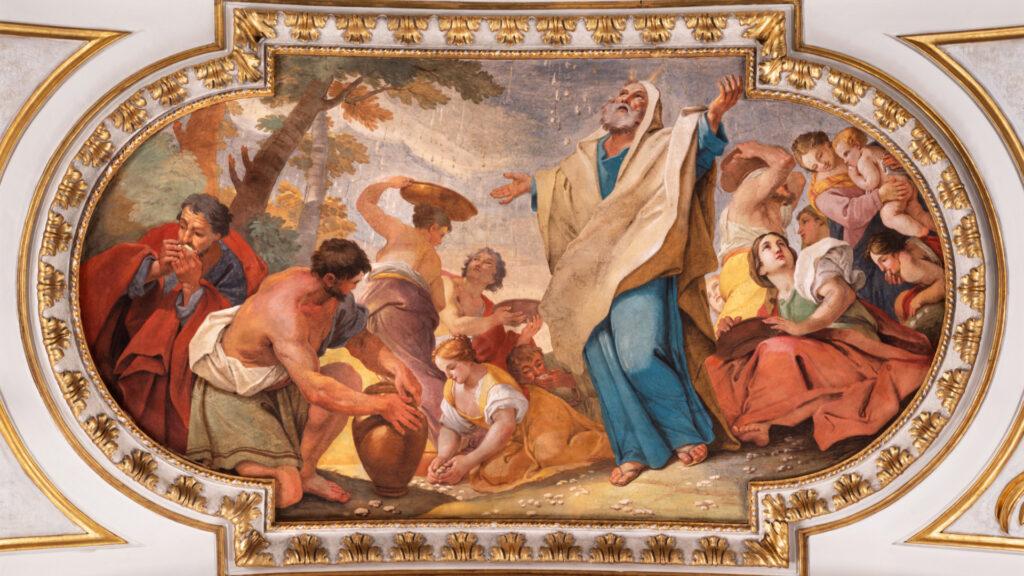
After escaping slavery in Egypt, the Israelites quickly realize they are hungry and tired. Desperate, they grumble against Moses and Aaron, longing for the comforts of their past, even if it was in the throws of oppression. This reaction seems unthinkable as we read this passage, but it’s sinful human nature to feel discontent when faced with uncertainty. Like the Israelites, we may find ourselves longing for the familiar and comfortable, even if it isn’t beneficial. This is the reality of need. The children of Israel acknowledged their needs but dwelt more on them than the One who delivered their lives. They failed to focus on the opportunities that God gave them, and when faced with challenges, they saw them as setbacks rather than growth experiences.
In response to the Israelites’ complaints, God, in His mercy, provides manna – a food that miraculously appears each morning. But the Lord only allows them to gather what they need for that day. He wants to teach them reliance on His word and provision in their journey to freedom. He wants them to learn the importance of trusting their needs will be met by the Father no matter how they felt or tried to take things into their own hands. The reality of need requires a balance of preparation and trust. We can plan obsessively for the future or to sit on our resources out of fear, but God wants us to be mindful of His power and ability to provide. Moses tells the Israelites in verses 6-7:
In the evening you will know that it was the Lord who brought you out of Egypt, and in the morning you will see the glory of the Lord.
This is our reality of need as well. The circumstances of our lives, similar to the ones of the Israelites between Elim and Sinai, alert us to what we should already know: that the Lord is the One who has delivered us. And when we trust in a plan bigger than ourselves, let go of control, and follow His guidance, we see the glory of the Lord and experience the reality of Him meeting our needs.
Exodus 16 is a narrative that resonates with our own struggles, desires, and experiences. We can navigate our lives with greater purpose and resilience by reflecting on the lessons of need, God’s provision, and trust. This chapter teaches us to embrace the wilderness experiences, knowing that each challenge brings with it the potential for spiritual growth and a deeper understanding of the Father’s heart. That is the reality of blessing.

Our Song
Read This Week: Exodus 15
I will sing to the Lord, for he is highly exalted. Both horse and driver he has hurled into the sea. “The Lord is my strength and my defense; he has become my salvation. He is my God, and I will praise him, my father’s God, and I will exalt him. The Lord is a warrior; the Lord is his name. – Exodus 15:1-3 NIV
Exodus 15 contains a powerful and beautiful moment in the aftermath of the crossing of the Red Sea. This portion of Scripture, often called the “Song of Moses and Miriam,” is a touching moment of worship that celebrates the Israelites’ liberation from slavery in Egypt and their miraculous and unthinkable journey to freedom. This passage highlights a significant event in biblical history and offers reflections on our lives today.
To fully appreciate this moving scene, it’s essential to be reminded of its context. It follows generations of brutal oppression, enslavement that was inhumane and cruel, a dwindling hope of rescue, the ten plagues culminating in the deaths of the firstborn, and the eventual departure. It comes after a roller coaster of emotions as they took flight to the miracle at the sea, an event that defied imagination and realm of human possibility. It comes after the terror of being pursued by Pharaoh’s army and the sweeping deliverance the Lord provided in a way that only He could.
The splendid and poetic lyrics of the song not only pay tribute to Yahweh as their salvation but also worship Him as a warrior who will fight on behalf of His people. The song converges two attributes of God’s character in showing us His mercy to deliver and righteousness to defend. Verses 2-3 capture this:
The Lord is my strength and defense; he has become my salvation. He is my God, and I will praise him, my father’s God, and I will exalt him. The Lord is a warrior; the Lord is his name.
This part and the whole chapter emphasize the spiritual importance of responding to God’s faithfulness in saving and fighting for us. In our worship, like the Israelites, we should practice acknowledging and celebrating the moments of deliverance and protection, both big and small. We glorify God when we praise and thank Him for the understated things as much as the tremendous ones.
The song of Exodus 15 also reminds us that God is ultimately in control, and His power can bring about extraordinary change even when we can’t see a way or think it’s possible. It further encourages us to trust God in difficult situations, knowing He is a warrior and can intervene in our lives to eternal effect. Verses 12-13 reinforce this truth:
You stretch out your right hand, and the earth swallows your enemies. In your unfailing love, you will lead the people you have redeemed. In your strength, you will guide them to your holy dwelling.
We, too, can write a song of worship to God in our own way, just like the Israelites on the banks of the Red Sea. We can start a gratitude journal where we write down daily things for which we are thankful. This discipline shifts focus from our challenges to our many blessings. We can always seek the Lord in prayer and spend intimate time with Him, especially when facing difficulties, as a means of community, to submit to His will, and to acknowledge His ability to intervene in our lives. We can create a playlist of songs that resonate with our experiences of deliverance and faith while singing or listening to them as a way to connect with Father God. We can spend time in the Scriptures and be confident in God’s sovereignty and power. We can set aside time annually when the proverbial waters come to a calm and reflect on what God has done in our lives.
As we reflect on our own journeys to freedom, let us join the song of Moses and Miriam and continually celebrate the victories God’s given, trusting in His incredible presence and power. That’s our song.
Stand Firm
Read This Week: Exodus 14
Moses answered the people, “Do not be afraid. Stand firm and you will see the deliverance the Lord will bring you today. The Egyptians you see today you will never see again. The Lord will fight for you; you need only to be still.” – Exodus 14:13-15 NIV
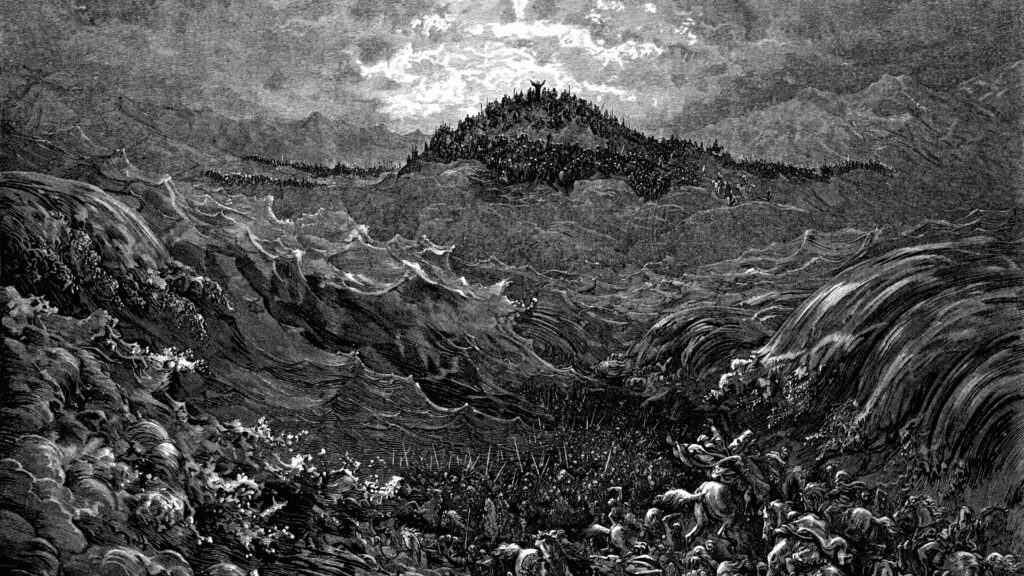
Exodus 14 is the one everyone knows. It is one of the most famous parts of the entire narrative. There have been countless commentaries on it in spiritual, historical, and even archeological circles by people of faith and those skeptical of God’s existence. This chapter embodies the book’s very name – the Exodus – as it depicts the Israelites’ escape from Egypt and their miraculous crossing of the Red Sea. It highlights the immutable sovereignty and extraordinary power of God, the faith of his people in the face of harrowing uncertainty, and how divine intervention is active in everyday life.
As we have read and studied to this point, the Israelites have been enslaved in Egypt for multiple generations. Their cries for deliverance were answered by God, who called on and raised up Moses to lead them out of the bondage that oppressed them for so long. After a series of plagues that demonstrated the Lord’s might, with the catalyst being the death of his own firstborn son, Pharaoh finally lets them go. However, as the children of Israel approach the Red Sea, Pharaoh reverts to a hardened heart, as he had so many times. He then summons his army to pursue and kill them before their journey goes beyond the desert. As a result, this historic and pivotal moment sets the stage for one of the most incredible displays of faith and divine power.
As the Israelites stand before the Red Sea, with the Egyptian army closing in, they become paralyzed by sudden fear and despair. They cry out to Moses in pain and even express that they should have stayed in Egypt. This reaction is a reminder of our human nature. We tend to forget God’s promises and assurances of who He is when we are anxious, unsure, and confronted with seemingly insurmountable obstacles. When we encounter overwhelming challenges, it’s essential to acknowledge our fears. However, instead of succumbing to despair, we can place our faith in God’s word, focus on His possibilities for our lives, and seek guidance from the Holy Spirit to stay resolved and on the mission.
But Moses, facing intense criticism and fear from the people, displayed remarkable courage and faith. He encouraged the Israelites, saying, Do not be afraid. Stand firm, and you will see the deliverance the Lord will bring you today (v.13). His confidence in God’s plan was a rallying cry for the people and propelled them to keep going when it seemed hopeless. This stand that Moses takes as the Egyptian army bore down on them is what Spirit-led, effective leadership often requires. It is the unwavering faith and ability to inspire others during difficult times because we trust the Lord and what He says He will do. Believers are called to communicate hope and vision, helping those around us to rise above our fears and to engage our faith in the Almighty. A firm stand is sometimes needed to claim all God has for us on the way.
As the Israelites stood strong, God instructed Moses to stretch out his hand over the waters. Then, the sea parts in an awesome, miraculous display of Yahweh’s power, allowing the Israelites to cross on dry ground and defeat the Egyptians in a devastating water event. This moment shows us that while we must have and act in faith, God’s intervention and assistance often come when we least expect it. Taking a stand and trusting in Jesus can lead to extraordinary outcomes. When faced with all the things this fallen world has to offer, we can take steps of faith and move where God works, knowing that we are not alone.
After they experienced the freedom of crossing the Red Sea and understanding that God would make good on His promises to them, the Israelites sang a song of praise to God for their deliverance in a beautiful moment. This act of worship is essential in acknowledging their journey and the miracles they had witnessed. Recognizing God’s goodness and provision as we celebrate victories, big or small is vital for our relationship and emotional and spiritual well-being with the Father and others. This approach of worship and gratitude allows us to take a spiritual stand and helps us remember what the Lord says and what we learned, strengthening our faith for the future and the challenges that may lie ahead.
It is important to remember that Exodus 14 is not just a historical account but a profound spiritual story that resonates with our modern struggles and victories. As we navigate our own Red Seas in life, we should trust Jesus and allow Him to fuel our courage in leadership and unwavering faith in the face of adversity. By doing so, we can trust that our journeys will lead us to a place of freedom and fulfillment, just as the Israelites discovered on their path to the Promised Land.

Honoring Wisdom
Read This Week: Exodus 13
The Lord said to Moses, “Consecrate to me every firstborn male. The first offspring of every womb among the Israelites belongs to me, whether human or animal.” Then Moses said to the people, “Commemorate this day, the day you came out of Egypt, out of the land of slavery, because the Lord brought you out of it with a mighty hand. – Exodus 13:1-3 NIV
Exodus 13 stands out among its chapters with instructions and symbols that hold relevance far beyond the immediate context. This chapter is pivotal as it lays the foundation for the practice of consecration and remembrance, themes that can offer practical insights for us as modern-day believers.
In verses 1-2, the Bible says the Lord told Moses to consecrate every firstborn male. The first offspring of every womb among the Israelites belongs to me, whether human or animal. As we will see going forward in the Old Testament, this Israelite spiritual practice was to sanctify the firstborn as a symbolic act of acknowledging God’s sovereignty and ownership over life. This act of worship was rooted in the Passover event when God spared the firstborn of Israel while striking down the firstborn of Egypt. For us, consecration can be understood as dedicating our best efforts and first fruits to God. Whether it’s dedicating time, resources, or energy, prioritizing what is most important can build a sense of purpose and gratitude. For instance, starting our day by reading the Word, praying, and meditating or dedicating the first portion of our income to the mission of the gospel can be ways to apply this principle.
Verses 6-7 describe the Feast of Unleavened Bread. This observance was a time for the Israelites to remember their hasty departure from Egypt. The absence of leaven symbolized purity and a break from their past lives. In our lives, this can be seen as a call to rid ourselves of leaven or negative influences regularly. This discipline could mean seeking the Holy Spirit for things to take out of our lives that are unnecessary, simplifying our lives by decluttering our hearts, or reflecting on and releasing unhealthy habits and attitudes. Additionally, setting aside time for reflection and celebration of personal milestones can serve as a way to remember and appreciate the progress made.
Verse 9 talks about the physical reminders of God’s commandments worn by Jewish people during prayer. This practice was intended to keep the divine laws constantly in mind. In a broader sense, this can translate to finding meaningful ways to keep God’s principles, core values, and desires at the forefront of our daily lives. Whether through visual reminders like sticky notes with Scripture, spiritual and personal affirmations, or setting regular reminders on our devices for Bible reading, reflection, and goal-checking, these tools help keep our minds and hearts on the things of Christ, His mission, and our calling.
The redemption of the firstborn donkey in verse 13 as an unclean animal, and the requirement to sacrifice a lamb in its place implicates the value of purity and redemption that we should emulate in our lives. This part illustrates the principle of substitutionary atonement, symbolizing that some things must be redeemed or transformed rather than discarded, just as Jesus saw us and made way for salvation through His sacrifice. He satisfied God’s wrath and allowed us to stand before God as justified by faith in His finished work on the cross. This can inspire us to find value and potential in areas of our lives that may seem problematic or useless. Rather than discarding them, we can ask God to redeem them and transform them into opportunities for growth and learning. We can go to the Lord and address sin issues, personal flaws, and shortcomings and to find solutions. He is the Father who brings beauty from ashes.
By reflecting and thinking about the themes in this chapter of consecration, remembrance, symbolism, redemption, and teaching, we are empowered by God to seek spiritual and practical ways to apply these ancient teachings of Exodus to our modern lives. Through such applications, we not only honor the wisdom of God’s people but also enrich our own lives with purpose, mindfulness, and continuity.

Judgment and Mercy
Read This Week: Exodus 12
During the night Pharaoh summoned Moses and Aaron and said, “Up! Leave my people, you and the Israelites! Go, worship the Lord as you have requested. Take your flocks and herds, as you have said, and go. And also bless me.” The Egyptians urged the people to hurry and leave the country. “For otherwise,” they said, “we will all die!” – Exodus 12:31-33 NIV
Exodus 12 shows us the tension between divine judgment and mercy leading up to the departure of God’s people from bondage. This section describes how the Lord ultimately delivers His holy verdict upon Egypt, culminating in the excruciating death of every firstborn male, from Pharaoh’s own son to the prisoner in the dungeon. This act of judgment is really the culmination of the severity of Pharaoh’s disobedience and the consequence of rejecting God’s will.
Yet, in the middle of this judgment, the Scriptures show us a profound expression of God’s divine mercy. The Israelites are spared through the blood of the Passover lamb, which marks their homes and signifies their covenantal relationship with Yahweh. It serves as their mark of grace. This juxtaposition of judgment and mercy points to a deeper theological truth: God’s judgment is righteous, but His mercy offers redemption and salvation. The Passover lamb marked the Israelites’ doorposts and became a central symbol of salvation. The blood signifies protection and deliverance from death. This act foreshadows the sacrificial approach established later in the Law. It indicates the ultimate sacrifice of Christ, often called the Lamb of God in the New Testament. Just as the Passover lamb’s blood shielded the Israelites, the sacrifice of Jesus is seen as providing redemption from sin and eternal death.
Exodus 12 institutes the Passover as a lasting ordinance, requiring that future generations remember and celebrate this event. This call to remember is more than a mere ritual; it’s a call to live in constant awareness of God’s deliverance and faithfulness. Observing Passover is a way for the Israelites to maintain their identity and covenant relationship with God. This principle of remembrance underscores the importance of spiritual practice and nurturing of faith and connection to community.
In modern days, Passover serves as a reminder of God’s past acts of salvation and deliverance. Similarly, Christian practices such as Communion can be seen as a continuation of this remembrance. Engaging in regular observances helps to ground believers in their faith, providing tangible ways to experience and express their spiritual commitments. We are always invited to reflect on the themes of judgment and redemption in our faith. Just as the Israelites were spared through the blood of the lamb, believers are asked to reflect on their own spiritual journeys and experiences of God’s grace through Jesus. This observance can prompt personal repentance, renewed commitment, and gratitude for the ways in which divine mercy has been experienced in one’s own life.
Passover was not just an individual celebration but a communal one. It was an event that united the Israelites in their shared experience of freedom. Similarly, the family of God today can draw inspiration from this collective aspect of worship. Whether through our gatherings, group Bible study, or shared acts of service, building a sense of spiritual unity, generosity, and mutual support mirrors the communal dimension of the Passover. That is why the Christian community and coming together to worship God is so essential in the believer’s life.
The story of this chapter is deeply tied to the theme of our series and the journey to freedom from oppression for Israelites. In a broader context, it calls for awareness and action against injustice and standing up for God’s Word. For us, this can translate into active engagement in the mission of the gospel and the family of God. It calls for fellowship in Christ and the unbreakable bond of the Holy Spirit that brings us together. It also inspires us to advocate for the marginalized and work towards personal and spiritual freedom and equality in our various aspects and circles of influence. As the redeemed and freed people, we are responsible for telling others how they can experience salvation and liberty from the bondage of sin and pain.
This commitment to our calling might involve leaving our comfort zones, setting aside regular times for reflection and prayer, reading the Word, and serving others, which honors the Lord and His goodness to us in the past. God’s righteous judgment and mercy are both a reality and should ensure that our lives and actions align with the values and teachings derived from such sacred memories of His holiness and grace to us.

Preparation
Read This Week: Exodus 11
The Lord had said to Moses, “Pharaoh will refuse to listen to you—so that my wonders may be multiplied in Egypt.” Moses and Aaron performed all these wonders before Pharaoh, but the Lord hardened Pharaoh’s heart, and he would not let the Israelites go out of his country. – Exodus 11:9-10 NIV
Exodus 11 is often overshadowed by the dramatic climax of the final plague, but valuable lessons for personal growth, preparedness, and resilience lie in it. This section leads up to the last and most devastating plague – the death of the firstborn in Egypt. It’s a pivotal moment in the biblical narrative with profound implications for our lives today.
This chapter serves as the backdrop to the final plague, giving the Israelites and the Egyptians a preview of what will come. Preparation is a recurring theme in this chapter. For the Israelites, it’s a moment to prepare for their imminent departure from slavery. This climactic moment highlights the importance of being prepared for significant changes or challenges in our lives. Whether it’s preparing for a career transition, a personal issue, or a major decision, taking time to plan and prepare can make a significant difference in how we handle these changes. Pharoah was unprepared for what he was about to face, but Moses and Aaron had God’s directive as their directional force. That is why we must seek the Lord and the guidance of the Holy Spirit in our preparation, no matter what we face or what is on the horizon.
Verses 4-6 details Moses’ powerful message about the forthcoming plague and emphasizes his role as a leader and a spokesman for God in a pivotal moment. His leadership is marked by clarity, conviction, and courage, as seen in the previous chapters. Whether in the workplace, at home, or in the community, we have the responsibility to communicate effectively and lead with integrity, especially during times of crisis and when God calls us to do something on mission.
This section of Scripture encourages us to embrace the calling and path God has for us despite the seeming barriers or opposition that we may encounter. This principle is especially true if we are in a leadership role. We must focus on clear communication from the Word and confidently making decisions with the Spirit’s help. When we lead with integrity and empathy, we inspire trust and respect from those around us and glorify God.
Once again, we see the gravity of the consequences of Pharaoh’s decisions. The final plague is a direct result of his hardened heart and refusal to free the Israelites. This serves as a reminder that our actions and decisions can have far-reaching consequences, affecting not only ourselves but those around us. Pharoah’s actions and rebellion give us an impetus to reflect on the decisions we make and consider their potential impact on the kingdom and others. With God’s help, we can make choices that are considerate of others and mindful of long-term, eternal outcomes.
We also see in this chapter that the approaching departure of the Israelites marks a significant change for them. They are moving from slavery to a journey of freedom, a dramatic shift that requires them to adapt to a new way of life – God’s way. Embracing change can be challenging but often necessary for growth and progress. When faced with change, we should trust the Lord and focus on its opportunities rather than the uncertainties. Embracing a positive, godly mindset can help us adapt more efficiently and make the most of new situations, even if they are scary or difficult.
While leading up to the climactic events of the final plague, this intense passage offers valuable lessons that extend beyond its historical context to theological and practical implications. By focusing on preparation, attentiveness to God’s will, and faith, we can draw valuable insights that apply to our daily lives. We are urged through the Scriptures to reflect on these principles and consider how they can inform our actions and mindset as we navigate our own challenges and opportunities. We never have the excuse of being unprepared, as God faithfully equips us with everything we need to live and join Him where He is moving.

Be Open
Read This Week: Exodus 10
So Moses and Aaron went to Pharaoh and said to him, “This is what the Lord, the God of the Hebrews, says: ‘How long will you refuse to humble yourself before me? Let my people go, so that they may worship me. If you refuse to let them go, I will bring locusts into your country tomorrow. – Exodus 10:3-4 NIV
Exodus 10 vividly portrays the eighth and ninth plagues God inflicts upon Egypt in His power: locusts and darkness. These two plagues demonstrate the might of God and the continuous, unyielding stubbornness of Pharaoh’s heart. Verses 1-20 outline the eighth plague of locusts. God instructs Moses to go to Pharaoh and demand the release of the Israelites once again and to warn Pharaoh that if he refuses, there will be a devastating plague of locusts that will cover the land and destroy everything left after the previous hailstorm.
Initially, Pharaoh’s officials plead with him to let the Israelites go. Pharaoh agrees to negotiate but is ultimately insincere about his intentions. After the locusts devastate the land, Pharaoh asks for relief but then hardens his heart once more when the locusts are removed. These repeated scenarios with the Egyptian ruler defy logic and reason in every way. His pride, ego, and thirst for control continue to have devastating consequences for his country and his people.
Verses 21-29 tell us about the ominous plague of darkness as God commands Moses to stretch out his hand toward the sky, bringing about three days of total darkness over Egypt. This darkness is so profound that it can be felt. People can sense and feel the heaviness of the lack of light. At this point, Pharaoh offers to let the Israelites go but demands that they leave their livestock behind. Moses refuses, stating that they need their animals for sacrifices. Pharaoh’s offer is rejected, and the darkness is lifted. Despite this devastating reality, Pharaoh continued to resist and would not give up control.
Pharaoh’s repeated refusal to heed God’s warnings highlights a critical aspect of human nature: stubbornness. Despite experiencing the devastating consequences of his defiance, Pharaoh repeatedly refuses to relent, showcasing how pride and resistance can lead to one’s downfall. This constant behavior by Pharoah is an excellent reflection for us as it prompts our hearts to examine areas where we might resist the Holy Spirit or necessary changes in our lives. It should cause us to look at any patterns, habits, or attitudes that must be addressed. This story should motivate us to check our submission level to God and seek personal growth and openness to change.
Like in Egypt during this time, we live in moments of confusion and moral ambiguity. We must be mindful to seek guidance from God’s Word, prayer, or counsel from the family of God. Just as the people felt darkness in Egypt, our personal and collective struggles can be opportunities to seek greater clarity and understanding. We must diligently seek light and clarity in times of chaos and spiritual darkness. It encourages turning to faith and divine guidance when faced with moral and existential issues.
Moses demonstrates faith and persistence in holding to and delivering God’s messages despite his own fear, reluctance, and inability to understand at times. He pleads with God on behalf of the Israelites and shows us the importance of strong, faithful leadership and intercessory prayer in the face of resistance and opposition. May we do likewise in our daily lives – resist the darkness and seek the way of Christ in troubled times.
We must not be spiritually stubborn but look inward to make sure our hearts are submissive, open, and clear about what the Lord wants for us. Like Moses, may He give us the humility, steadfastness, and consistency to speak His truth and gospel amid many confusing messages.