
Deuteronomy

Drawn Away
Read This Week: Deuteronomy 13
If you hear it said about one of the towns the Lord your God is giving you to live in that troublemakers have arisen among you and have led the people of their town astray, saying, “Let us go and worship other gods” (gods you have not known), then you must inquire, probe, and investigate it thoroughly. And if it is true and it has been proved that this detestable thing has been done among you. – Deuteronomy 13:12-14 NIV
Deuteronomy 13 can be a difficult chapter. It belongs to a particular moment in Israel’s covenant history, and its commands concerning false prophets, idolatry, and judgment can feel severe. But we should resist the temptation either to soften the text or to transport Israel’s civil penalties into our own context carelessly. Beneath those commands is a theological principle that reaches far beyond ancient Israel: God takes our allegiance seriously.
The chapter presents three different ways Israel could be drawn away from God: through a persuasive spiritual voice, through someone deeply loved and trusted, or through the influence of an entire community. Different sources. Same temptation. “Let us go and serve other gods.” That repetition shows the central concern is not merely the existence of idols. It is the movement of the heart and what can move us away from God.
The first warning is perhaps the most surprising. Moses describes a prophet or dreamer who provides a sign, and the sign actually happens. We tend to assume that if something works, it must be right. If the business grows, the strategy must be good. If the platform expands, the message must be true. If the opportunity opens, God must be behind it. If someone is charismatic, gifted, successful, persuasive, we assume credibility. The Scriptures dismantle that assumption. Effectiveness is not the same thing as faithfulness.
Something can produce results and still pull us in the wrong direction. An opportunity can be profitable and unhealthy. A relationship can be exciting and destructive. A leader can be gifted and untrustworthy. A philosophy can sound sophisticated while slowly taking our confidence away from God. Discernment therefore asks more than, “Does it work?” It asks, “Where is this leading me?” That may be one of the most important questions we can ask about anything influencing our lives.
The second warning becomes more personal. Moses moves from prophets to relationships: a brother, son, daughter, spouse, or close friend. Not everything that competes with our devotion to God arrives looking evil. Sometimes it comes through affection. We naturally give influence to people we love, and we should. But love can become disordered when our desire to preserve a relationship outweighs our desire to remain faithful to what is true. We can begin adjusting convictions to avoid tension. We remain silent because honesty might cost us something. We permit unhealthy behavior because confronting it feels unloving. We slowly become someone different because belonging has become more important than obedience.
Biblical faithfulness is not permission to become harsh, suspicious, or self-righteous. Truth and love are not enemies. But Scripture consistently refuses to allow love for people to replace love for God. Healthy relationships should not require us to surrender our deepest convictions. There is a difference between loving someone unconditionally and allowing that person unlimited influence over who we are becoming.
As the chapter ends, Moses returns to obedience: listening to God, keeping His commands, and doing what is right. That is the message inside a chapter filled with warnings. Faithfulness is not just about rejecting false gods. It is continually returning our hearts to the true God. That requires attention. We should regularly examine what is shaping us. We should pay attention to the voices we repeatedly hear, the people who carry disproportionate influence, the environments we inhabit, the ambitions we pursue, and the stories we tell ourselves about what will finally make life meaningful.
The question of Deuteronomy 13 is not simply, Do we worship idols? It is more searching than that: What has enough influence over us to compete with our allegiance to God? An even more practical question is: Where is it leading us? Every voice, relationship, ambition, system, and culture is forming us in some direction. God sometimes does His own drawing away as He pulls us away from what and where we don’t need to go or be, and back to Him and the path of worship He wants us on.
The goal is not to live suspicious of everything around us. It is to live awake. To love people deeply without putting them above God. To pursue success without worshiping it. To participate in culture without surrendering discernment to it. To appreciate gifted leaders without confusing charisma with character. To receive opportunities without assuming every open door is God’s direction. And to continually bring the center of our lives back into alignment with the One who belongs there.

Competing Altars
Read This Week: Deuteronomy 12
But take your consecrated things and whatever you have vowed to give, and go to the place the Lord will choose. Present your burnt offerings on the altar of the Lord your God. Be careful to obey all these regulations I am giving you, so that it may always go well with you and your children after you, because you will be doing what is good and right in the eyes of the Lord your God. – Deuteronomy 12:26-28 NIV
Deuteronomy 12 can seem like it’s about places, sacrifices, and worship practices. But it holds a profound theological truth: God cares not only that we worship Him, but also how we worship Him. Israel was entering a new land surrounded by cultures with their own gods, rituals, and definitions of what it meant to live well. God therefore called His people to resist the temptation to blend Him into their surroundings. They were to tear down the places of false worship and establish their worship around the place God Himself would choose. Their relationship with the Lord was not to be shaped by whatever was culturally convenient; it was to be shaped by God’s presence, power, and revelation.
We live in a world filled with competing voices telling us what deserves our attention, affection, money, loyalty, and time. We’ve talked about this before, but idolatry may not look like a pagan statue on a hill. It can look like career, comfort, reputation, political identity, entertainment, possessions, romance, achievement, or even our desire for control. The deeper issue isn’t merely what we possess, but what possesses us. The bigger question is: Who gets to define what is worthy of my worship? If God is truly Lord, then He’s not simply added to a life whose priorities have already been determined by everything else.
One theme of the chapter is that worship is meant to gather God’s people together. Israel was not instructed to worship God however and wherever each person preferred. God appointed a center for their worship. Biblical faith is not merely a private spirituality in which we construct a God to fit our preferences. God calls His people into a community, and genuine worship draws us out of ourselves. The Bible teaches that following Christ involves belonging to His people. Faith is personal, but it is not meant to be private.
This section also repeatedly connects worship with joy. The people were to bring their offerings before the Lord and rejoice in His presence. This matters because obedience to God can sometimes feel like a monotonous religious duty. Yet biblical worship is not fundamentally about earning God’s favor through miserable performance. It responds to God’s goodness; He commands Israel, and He also reminds them to eat, celebrate, give thanks, and rejoice before Him. Holiness and joy are not opposed. When rightly understood, holiness teaches us to enjoy God’s gifts without turning those gifts into little gods.
At the same time, it teaches us to receive ordinary gifts from God with gratitude. Food, family, work, celebration, and the enjoyment of creation are inherent to spiritual life. The danger comes when good gifts become ultimate things. Scripture does not call us to despise God’s gifts; it calls us to receive them as such. Believers can enjoy a meal, pursue meaningful work, laugh with friends, build a family, or appreciate beauty while remembering that none of these things can bear the weight of being God.
The good news of the gospel is that the Lord does not merely expose misplaced worship; He calls us back to Himself. In Christ, we see the One who perfectly loved the Father and lived with undivided devotion. Jesus does not merely tell us to worship right; He reconciles us to God so our worship flows from grace rather than fear. Because of Christ, we do not have to construct a life impressive enough to make the Father accept us. We are invited to receive His mercy and then reorder our lives around Him.
Worship directs our entire life. What we love, how we spend our time, what we pursue, how we use our possessions, how we treat people, and what we trust all reveal what we worship. The challenge is not simply to remove competing altars but to fill our lives with a greater vision of God Himself. It then becomes the pathway by which our lives align with reality, gratitude, joy, and love.

A Faithful Memory
Read This Week: Deuteronomy 11
Love the Lord your God and keep his requirements, his decrees, his laws and his commands always. Remember today that your children were not the ones who saw and experienced the discipline of the Lord your God: his majesty, his mighty hand, his outstretched arm. – Deuteronomy 11:1-2 NIV
Deuteronomy 11 is a major preparation passage. Moses is readying Israel to enter the Promised Land, and he repeatedly calls them, as he has before, to remember, love, obey, and teach. He begins with a simple command: Love the LORD your God and keep his requirements, his decrees, his laws, and his commands always. Love and obedience belong together. Throughout Scripture, love for God is not merely an emotion or an inward affection; it takes shape in how we live. At the same time, obedience without love can become empty religion. Father God desires a people whose lives are shaped by affection for Him, gratitude toward Him, and trust in His word.
This chapter is remarkably relevant to our lives. We sometimes think that spiritual maturity is primarily about learning more information, but what we remember and practice determines how we live. Spiritually, memory is meant to produce faithfulness. When life becomes uncertain, we are prone to focus exclusively on what is happening now. Anxiety tells us to forget yesterday’s faithfulness and stare only at tomorrow’s uncertainty. Biblical remembrance turns our attention backward, not to live in the past, but to recover confidence in the God who has already carried us through.
We must also model this faith for the next generation. Israel was to teach their children, talk about God’s commands throughout the day, and keep His words before them continually. This challenges the tendency to treat faith as a private compartment of life. Our relationship with Jesus should be woven into meals, conversations, decisions, work, parenting, relationships, and ordinary routines. What we repeatedly talk about and practice eventually becomes part of our personal culture and our homes.
Another striking theme is dependence. Moses contrasts the land of Egypt, where agriculture could depend heavily on human irrigation, with the Promised Land, which depended upon rain from heaven. Modern life gives us an extraordinary illusion of control. We can schedule, insure, automate, save, plan, and calculate almost everything. These are good and responsible practices, but they can quietly persuade us that our security rests in our ability to manage life. The Bible calls us back to humility. Work faithfully, but remember that you are dependent. Plan carefully, but pray. Use your abilities, but acknowledge the One who gave them. Gratitude is one way we resist the illusion of self-sufficiency.
The chapter concludes with the imagery of blessing and curse, life and death set before Israel. Moses is not presenting obedience as a way to manipulate God into giving us what we want. Rather, he is describing the profound reality that we live with the consequences of what we worship and obey. Our choices form us. What we repeatedly give ourselves to eventually shapes our character, our relationships, and our direction.
Perhaps the most practical lesson is also the simplest: remember God intentionally. Remember His faithfulness when we are afraid. Remember His provision when we are tempted by scarcity. Remember His commands when convenience becomes more attractive than obedience. Remember His character when circumstances make Him seem distant. And remember Him in the ordinary moments, because faith is rarely formed in extraordinary moments alone. We have to be intentional because our spiritual lives are formed through thousands of small acts of remembrance, trust, obedience, gratitude, and worship.
A faithful life begins with a faithful memory. We become forgetful when we constantly stare at our circumstances and forget the God behind them. But when we deliberately remember who God is and what He has done, our hearts are reoriented to Him. We begin to obey not merely because we are commanded to, but because we know that God has been faithful every step of the way.

He Is Our Praise
Read This Week: Deuteronomy 10
Fear the Lord your God and serve him. Hold fast to him and take your oaths in his name. He is the one you praise; he is your God, who performed for you those great and awesome wonders you saw with your own eyes. Your ancestors who went down into Egypt were seventy in all, and now the Lord your God has made you as numerous as the stars in the sky. – Deuteronomy 10:20-22 NIV
The life of faith is ultimately about returning to God each day. Moses recounts how God told him to make new stone tablets after Israel broke the first ones through idolatry. The broken tablets showed Israel’s rebellion, but the new tablets showed God’s mercy. Before Israel could move forward, God had to restore them. This is one of the chapter’s great theological truths: our failure does not exhaust God’s willingness to forgive. God does not pretend that sin is insignificant, but neither does He abandon His people when they fail. He restores them and calls them to walk with Him again.
That pattern speaks directly to ordinary life. We often imagine that spiritual growth means never stumbling, never making the wrong decision, never falling into the same weakness twice. But Scripture presents a different picture. Faithfulness is not perfection; it is continually turning back toward God. Sometimes our choices leave something broken behind us: a relationship, a habit, a commitment, a season of obedience. Repentance is not merely feeling sorry about what happened. It is accepting God’s invitation to begin walking with Him again. Grace does not erase the seriousness of our failures; it gives us the possibility of an obedient future beyond them.
The language of this section is also deeply relational: fear, walk, love, serve, hold fast. Obedience is meant to flow from a life oriented toward God. This challenges a common tendency in our own spirituality sometimes to reduce Christianity to a collection of activities. We can attend worship, read Scripture, and serve in ministry, yet still let our hearts drift. God is after something deeper. He wants our allegiance, our affection, and our everyday lives.
More interesting language is the command to circumcise your heart. Circumcision was an outward covenant sign, but Moses uses the image to point toward an inward transformation. God wants the barriers around the heart removed so that His people can genuinely love and obey Him. It is possible to look spiritually healthy on the outside while becoming increasingly resistant to God on the inside. Pride, resentment, self-sufficiency, bitterness, and secret compromise can harden the heart long before they become visible to anyone else. Spiritual maturity therefore requires examining what we’re doing and what is happening inside of us. A soft heart remains teachable, repentant, responsive, and willing to be corrected by God.
Loving the Lord should change how we speak to people, interact with the family of God, treat employees and coworkers, respond to strangers, handle disagreements, spend our resources, and regard those whose circumstances differ from our own. Scripture does not allow us to separate devotion to Christ from love expressed toward others. The question is not simply whether we worship God sincerely, but whether our lives increasingly reflect His character.
He is the one you praise; He is your God. Israel’s identity was not ultimately rooted in its strength, success, or accomplishments. Its greatest possession was God Himself. We need that reminder too because life constantly tempts us to build our identity around other things. Our careers, families, reputation, possessions, achievements, failures, or others’ approval. Those things may matter, but none of them can bear the weight of being our ultimate source of worth. When God becomes our praise, we are freed from having to prove ourselves continually.
Deuteronomy 10 therefore calls us to a simple but demanding way of life: receive God’s mercy, keep your heart soft, walk in His ways, love Him wholeheartedly, and let His character shape how you treat others. The chapter does not present obedience as a way to earn God’s love. Like we’ve seen before, obedience is the grateful response of people who have already experienced His mercy. We obey not to convince God to love us, but because His love has given us a new direction. He is our God, and He is our praise.
For everyday life, that means beginning again when we fail, examining the condition of our hearts rather than merely our outward behavior, choosing obedience when nobody is watching, and looking for practical ways to reflect God’s compassion toward people who are easily overlooked.

Response to Grace
Read This Week: Deuteronomy 9
I lay prostrate before the Lord those forty days and forty nights because the Lord had said he would destroy you. I prayed to the Lord and said, “Sovereign Lord, do not destroy your people, your own inheritance that you redeemed by your great power and brought out of Egypt with a mighty hand. Remember your servants and overlook the stubbornness of this people, their wickedness and their sin. – Deuteronomy 9:25-27 NIV
Deuteronomy 9 cuts straight to one of the most persistent temptations of the human heart: the temptation to believe that God’s blessings are ultimately a reward for our goodness. Moses makes something unmistakably apparent here. Israel is about to receive a land they did not earn because they were more righteous than the nations living there. In fact, Moses tells them, It is not because of your righteousness (v.5). That statement goes against our instinctive desire to see ourselves as deserving.
We like to believe that our success proves our virtue, that our blessings validate our faithfulness, and that the good things in our lives are evidence that we have somehow earned God’s favor. But the Bible reminds us that grace cannot be reduced to performance. God’s faithfulness is grounded first in who God is, not in how impressive we are.
This matters because Israel had every reason to become proud. They were about to possess a land filled with strong and established nations. Yet Moses warns them not to interpret their victory as evidence of their superiority. Their history showed the opposite, and Moses spends much of the chapter reminding them of their rebellion, especially the devastating episode of the golden calf.
While Moses was on the mountain receiving the covenant, the people were already turning away from the God who had rescued them from Egypt. They had seen God’s power, experienced His provision, and witnessed His presence, yet they still fashioned an idol. Their problem was not a lack of evidence. Their problem was the human tendency to replace trust in the living God with something visible, manageable, and controllable.
The golden calf exposes something in us. An idol is anything we trust, treasure, or depend upon in a way that belongs properly to God. We may not bow before a golden statue, but we can construct idols out of money, achievement, relationships, power, reputation, comfort, security, or even ministry. The deeper issue is often our desire for a god we can manage. The true God calls us to trust Him, while our idols promise control. We would often rather have something we can see and is malleable than Someone we must faithfully follow.
Yet the most remarkable figure in this chapter is not Israel’s rebellion but Moses’ intervention. When God’s judgment is deserved, Moses falls before the Lord and pleads for mercy. He does not minimize Israel’s sin, but he doesn’t abandon the people. He stands between a holy God and the people, pleading on their behalf. Moses’ act points forward to the larger biblical theme of mediation and fulfillment in Christ. Where Israel repeatedly proves faithless, Jesus remains faithful. Where Moses pleads for mercy, Christ gives Himself as the decisive basis for mercy. Our hope has never rested in our ability to be perfect. Our hope rests in the sovereignty and kindness of God, the One who intercedes for His people.
Spiritual experiences do not automatically produce spiritual fruit. Israel had witnessed extraordinary miracles, yet they quickly turned toward an idol. We can make the same mistake in quieter ways. A powerful worship service, a meaningful retreat, an answered prayer, or a season of spiritual growth can be genuinely valuable, but none of these experiences guarantee obedience. Faith is more than a collection of memorable moments. It is a daily posture of trust, repentance, and obedience. We cannot live indefinitely on yesterday’s encounter with God. We must continue walking with Him today.
Deuteronomy 9 also teaches us how to remember our past without either pride or despair. Moses tells Israel to remember their rebellion. This is not an exercise in shame for shame’s sake. They need an accurate memory because pride distorts the past. We are remarkably good at remembering our victories while conveniently forgetting our failures. Biblical remembrance corrects that tendency. Remembering our failures can cultivate humility, gratitude, and dependence upon grace. The goal is not to remain trapped in guilt but to become increasingly amazed that God has been faithful to people who have so often let Him down.
That perspective changes how we approach both success and failure. When life goes well, Scripture tells us not to congratulate ourselves as though we have earned God’s goodness. We can work hard, exercise wisdom, make responsible decisions, and still recognize that every good gift ultimately comes from the Father. And when we fail, we do not have to conclude that we are beyond mercy. Grace does not make sin insignificant; it makes God’s mercy amazing.
This is the text’s practical emphasis: live with humility because everything depends on grace. When we succeed, give thanks rather than boasting. When we recognize sin, repent rather than rationalizing it. When we see others’ failures, remember our own need for mercy instead of condemning. When we feel spiritually strong, remain watchful rather than presumptuous. And when we feel spiritually weak, remember that our relationship with God ultimately rests not on our flawless performance but on His steadfast character.
The proper response to grace is neither pride nor passivity, but grateful obedience. We obey not to convince God that we are worthy of His love; we obey because His love has already shown us who He is. The more clearly we understand that, the less we need to build idols, defend our righteousness, or take credit for God’s gifts. We can walk forward humbly, trusting the Lord whose faithfulness is greater than our own.

Remember the Giver
Read This Week: Deuteronomy 8
When you have eaten and are satisfied, praise the Lord your God for the good land he has given you. Be careful that you do not forget the Lord your God, failing to observe his commands, his laws and his decrees that I am giving you this day. Otherwise, when you eat and are satisfied, when you build fine houses and settle down, and when your herds and flocks grow large, and your silver and gold increase, and all you have is multiplied, then your heart will become proud, and you will forget the Lord your God, who brought you out of Egypt. – Deuteronomy 8:10-14 NIV
Don’t forget the Giver. That’s what Deuteronomy 8 teaches us. Moses knows that the greatest danger ahead may not be hardship but prosperity. For forty years, God led them, sustained them, disciplined them, and provided for them. Now they were about to enter a land of abundance, and Moses warns them not to confuse God’s gifts with self-sufficiency. This exposes a natural human tendency that impacts us all. We often seek God most earnestly when we are desperate and forget Him most easily when life is comfortable.
Moses begins by telling Israel that their hardship was not evidence of God’s absence. It was part of His formation and leading. He humbled you and let you hunger, he says, before reminding them that God then fed them with manna. The wilderness revealed what was already true but difficult to recognize: we do not ultimately live by our own resources. Jesus later echoes this when Satan tempts Him in the wilderness, saying that man does not live by bread alone, but by every word that comes from the mouth of God. Our lives are sustained not merely by what we can obtain, produce, control, or consume, but by Father God Himself.
This does not mean our suffering is always easy to explain or that we should treat every hardship as a lesson. Scripture gives us room to lament, question, and grieve. But it also teaches us that God can use seasons of limitation to expose our false beliefs about independence—the wilderness strips away the fantasy that we are self-made people. When plans fail, resources grow scarce, doors close, or the future becomes uncertain, we discover how much of our confidence rested on circumstances rather than on the Lord. Sometimes the wilderness’s uncomfortable grace is that it shows us we need Him more than anything.
The chapter’s most serious warning comes when Israel is no longer hungry. Moses imagines them eating and becoming satisfied, building beautiful homes, growing wealthy, and enjoying prosperity. Then comes the danger: my power and the might of my hand have gotten me this wealth. Notice that Moses does not condemn wealth itself. The problem is forgetfulness.
Prosperity becomes spiritually dangerous when the gift causes us to forget the Giver. Success can quietly rewrite how we understand our own lives. We begin to interpret provision as achievement, opportunity as entitlement, and blessing as proof of our own superiority.
We can pray for a job and then, after receiving it, live as though God had little to do with it. We can ask Him for healing and then quickly return to self-reliance when we feel strong again. We can plead for resources during financial difficulty and then become consumed with possessions once our needs are met. Even ministry can become a source of pride when we begin to believe that God’s work depends primarily upon our gifts.
The spiritual answer is remembrance and gratitude. Israel is repeatedly commanded to remember the Lord because forgetting God is not merely a personal shortcoming; it is a failure of worship. We forget when we live as though everything we have originated with us. Remembering, by contrast, means intentionally recognizing God’s providence in the details of our lives. It means looking at a meal and remembering provision, at a paycheck and remembering grace, at a home and remembering generosity, at an ability and remembering the Giver, and even at a difficult season and remembering that God has not abandoned us.
Perhaps that is why remembering is such a vital practice. We need spiritual habits that interrupt our tendency toward self-reliance. Prayer before work, gratitude before meals and small wins, generosity when resources increase, praise when circumstances are good, Scripture when life is confusing, and regular reflection on the ways God has carried us. These help us remain awake to the grace we are already receiving.
Deuteronomy 8 ultimately calls us to a life of humble remembrance. The goal is not to romanticize the wilderness or fear success, but to recognize God in both. When we have little, He is worthy of our trust. When we have much, He is worthy of our thankfulness. When we are being disciplined, He is worthy of our submission. When we are blessed, He is worthy of our worship. The great danger is not having too little or too much; it is forgetting who gave us everything in the first place.
In life, the wilderness teaches us dependence. Abundance tests whether we have learned it. We must take care to remember the Giver at all times and in all seasons.

Competing Hearts
Read This Week: Deuteronomy 7
The Lord did not set his affection on you and choose you because you were more numerous than other peoples, for you were the fewest of all peoples. But it was because the Lord loved you and kept the oath he swore to your ancestors that he brought you out with a mighty hand and redeemed you. – Deuteronomy 7:7-8 NIV
Deuteronomy 7 is challenging because it confronts us with God’s holiness and the seriousness of idolatry. Israel was about to enter the Promised Land, and God commanded them not to make covenants with the nations living there or adopt their gods and practices. The chapter’s central message remains deeply relevant today: God’s people cannot faithfully belong to Him while continuing to make peace with idols that compete for their hearts.
The command to separate from the nations was not rooted in Israel being morally superior. In fact, Moses makes that clear: The LORD did not set his affection on you and choose you because you were more numerous than other peoples (v.7). God chose Israel because He loved them and because He was faithful to His covenant. That is an important foundation for understanding obedience. Biblical holiness is not an attempt to earn God’s love; it is a response to having already been loved by God. We do not obey so that God will choose us. We obey because, in Christ, we have been graciously chosen and loved.
That distinction matters in everyday life. When our relationship with God becomes primarily about performance, obedience quickly becomes exhausting and prideful. But when we understand that God’s grace comes first, obedience becomes an expression of gratitude. We can say no to sin not because we are trying to prove ourselves worthy, but because we belong to Someone better. The Christian life is not merely about avoiding bad things; it is about refusing to give our deepest loyalty to anything less than God.
This is why Moses repeatedly warns Israel about idols. Idolatry is more than bowing before a statue. An idol is anything we trust, love, fear, or pursue as though it can give us what only God can provide. Money can become an idol. Success can become an idol. Approval, comfort, relationships, political identity, achievement, or even family can occupy a place in our hearts that belongs to the Lord alone. The danger is that idols rarely announce themselves as idols. They often begin as good things that quietly become ultimate things.
This convicting section also gives us a beautiful picture of God’s character. Moses says that God is the faithful God, keeping his covenant of love to a thousand generations (v. 9). His commands are not the arbitrary demands of a distant ruler. They come from a covenant-keeping, merciful God who knows what will destroy His people and what will lead them toward life. Sometimes Father God’s “no” expresses His love. We may not understand every command immediately, but we can trust the character of the One who gives it.
Perhaps the most practical question this chapter raises is: What am I allowing to compete with God for my heart? We should regularly examine what occupies our thoughts, controls our decisions, determines our sense of worth, and consumes our time, energy, and resources. Whatever we cannot imagine surrendering may reveal where our true commitment lies.
The answer is not greater human or mental willpower. Israel’s story shows that God’s people need His faithfulness. The Bible ultimately points us toward a God who keeps His promises despite the weakness of His people. For us as Christians, that faithfulness finds its fullest expression in Jesus Christ, through whom God establishes the new covenant and calls us to Himself. We are secure not because we have perfectly maintained our devotion, but because God is perfectly faithful.
So this week in Deuteronomy calls us to two things at once: take holiness seriously and take God’s love seriously. Tear down the idols, guard your heart, refuse compromises that slowly pull you away from Him, but do all of this from the confidence that a faithful Savior loves you. The goal is not a life emptied of everything enjoyable; it is a non-competing heart and a life reordered around the One who is worthy of everything.

Deepest Affection
Read This Week: Deuteronomy 6
Hear, O Israel: The Lord our God, the Lord is one. Love the Lord your God with all your heart and with all your soul and with all your strength. These commandments that I give you today are to be on your hearts. Impress them on your children. Talk about them when you sit at home and when you walk along the road, when you lie down and when you get up. Deuteronomy 6:4-7 NIV
Deuteronomy 6 is a beautiful reminder that our faith is not meant to be confined to select moments; it is meant to shape our whole lives. Moses begins the section with the great confession, Hear, O Israel: The LORD our God, the LORD is one, and immediately connects that belief with love: You shall love the LORD your God with all your heart and with all your soul and with all your might. Biblical faith is more than agreeing with certain truths about God or Jesus. It is a wholehearted response to who He is. God does not desire a portion of our attention, our Sundays, or the margin we can spare. He calls us to love Him with everything we have.
This chapter is practical because it moves from theology into ordinary routines. God’s commands are to be talked about when you sit in your house, when you walk by the way, when you lie down, and when you rise. In other words, discipleship happens in the middle of everyday life. Faith is formed around dinner tables, during conversations, on morning commutes, in moments of correction, through decisions about money and work, and in the heart’s quiet thoughts.
We often imagine that spiritual growth requires extraordinary experiences, but the Bible teaches us to recognize opportunities for worship, praise, devotion, and the sacred potential of ordinary moments. The goal is not to find more time for God, but to learn to live every moment consciously before Him.
The Scriptures also warn us here about one danger of prosperity: forgetting. Moses tells Israel that when they enter a land of abundance, possess good houses, enjoy plenty, and experience success, they must take care lest they forget the LORD. This remains so relevant today. Hardship can drive us toward God, but comfort can quietly persuade us that we no longer need Him. Success can make us self-sufficient; abundance can make us spiritually forgetful. We need to be intentional about remembrance. We must regularly think on what God has done, give thanks for what we have received, and acknowledge that even our abilities, opportunities, and resources are ultimately gifts from Him.
Perhaps the deepest lesson, though, is that love for God must become a way of life we pass on to others. Parents are instructed to teach their children, not just through formal lessons, but through continual conversation and examples. Our lives inevitably teach the next generation what we truly value. Children, friends, coworkers, and communities learn not only from what we say about God but from what our priorities reveal about Him. If we say God is first but consistently give our best energy to status, money, entertainment, or approval, our lives may preach something different from our words.
This week calls us back to a simple but necessary vision: know God, love God, remember God, and build a life that continually points others toward Him. The Christian life is not sustained by occasional spiritual enthusiasm but by daily remembrance and faithful obedience. We can begin today by asking a few honest questions: What occupies my deepest affection? What has success or comfort caused me to forget? Where can I intentionally bring God into my ordinary conversations and decisions? And what is my life teaching those around me about what matters most? Deuteronomy 6 reminds us that loving God is the foundation for a truly ordered, blessed life.
Hearing God Again
Read This Week: Deuteronomy 5
Hear, Israel, the decrees and laws I declare in your hearing today. Learn them and be sure to follow them. The Lord our God made a covenant with us at Horeb. It was not with our ancestors[a] that the Lord made this covenant, but with us, with all of us who are alive here today. – Deuteronomy 5:1-3 NIV
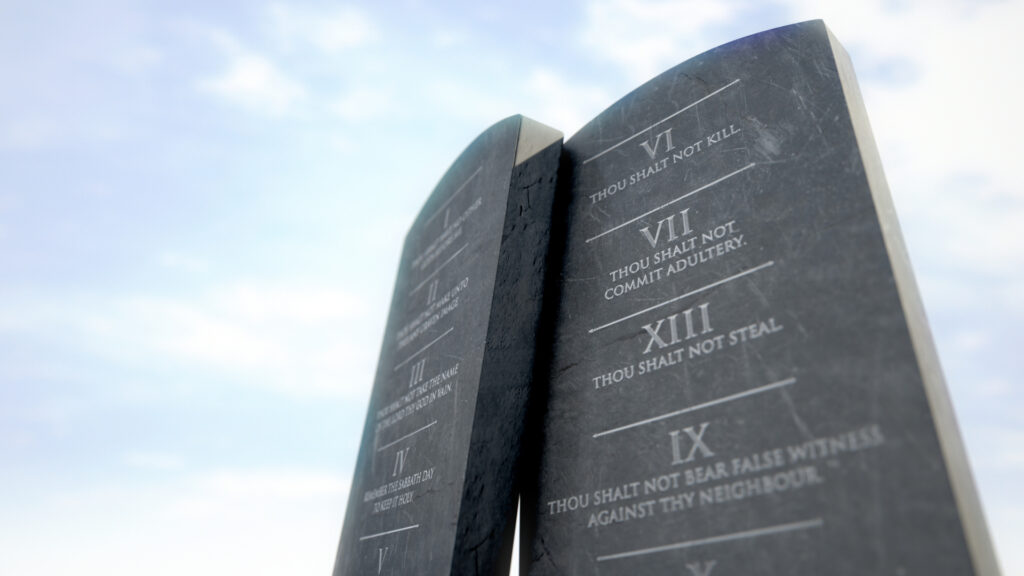
Most everyone has heard of the Ten Commandments, but many probably don’t know the context of Deuteronomy 5, which marks the defining moment when Israel receives God’s laws. Moses gathers the people and reminds them of the covenant the Lord made with them at Horeb. Moses does so because he is now speaking to a new generation. Many of those who first stood at Sinai have died in the wilderness, yet the word of God powerfully lives on.
The covenant needs to be heard again. Moses tells Israel, The LORD our God made a covenant with us at Horeb. It was not with our fathers that the LORD made this covenant, but with us (v. 2–3). This reminds us that faith is not inherited. We may grow up hearing Scripture, attend church, or come from a godly family, but every generation must personally hear and respond to God and the Gospel.
The Ten Commandments were not and are not arbitrary rules imposed upon an otherwise reluctant people. Before God tells Israel how to live, He reminds them who He is and what He has done: I am the LORD your God, who brought you out of the land of Egypt, out of the house of slavery (v. 6). Here, we see that God’s sovereignty and His grace come before His commandment. The Lord has already acted to redeem His people, and their obedience is a response to that redemption.
This pattern is important for us as Christians too. We do not obey God to persuade Him to love us; we learn to obey because, in Christ, we have encountered His grace. Biblical obedience is not an attempt to earn a relationship with God but the grateful response of people who have already received His mercy and salvation.
The commandments themselves reveal that God cares about every dimension of human life. The first commands concern our relationship with God: we are not to have other gods, make idols, misuse His name, or forget the Sabbath. The remaining commands move naturally into our relationships with other people: honoring parents, protecting life, faithfulness in marriage, respecting possessions, telling the truth, and refusing to want something that isn’t ours.
There is a strong theological unity in this passage with God’s laws. Loving God cannot be separated from how we treat people. Worship that never changes our relationships is empty, while morality detached from God eventually loses its foundation. Deuteronomy 5 therefore presents holiness as something that reaches into ordinary life—our homes, marriages, speech, work, desires, possessions, and use of time.
The command to keep the Sabbath is worth highlighting as well. Israel is told to remember that they were enslaved people in Egypt and that God brought them out with a mighty hand and an outstretched arm (v. 15). Sabbath is therefore more than a command to stop working; it is a declaration of freedom. Slaves are defined by endless labor and the demands of their masters. God’s people, however, are invited to slow down and trust Him. Sabbath-like rhythms remind us that we are not machines and that our value does not come from how much we accomplish. Rest becomes an act of faith: God remains faithful even when we stop working.
Perhaps the most searching command in the chapter is the final one: You shall not covet (v. 21). Unlike murder, adultery, or theft, coveting often remains hidden from everyone except God. It concerns the inner life, the desires that quietly tell us that what God has given us is not enough. This shows something important about biblical holiness: God is not merely interested in outward behavior. He wants to transform the heart. We can appear respectable while being consumed by envy, comparison, resentment, or an insatiable desire for more. The command against coveting calls us to examine not only what we do but also what we love and what we believe will satisfy us.
Moses ends the section by urging Israel to walk in all the way that the LORD your God has commanded you (v. 33). The image is not simply of knowing a list of commandments but of walking a particular way through life. God’s truth is meant to become a path. The question is not so much, “Do I know the Ten Commandments?” but, “What kind of person am I becoming as I follow God?” Do my priorities demonstrate that God is first? Does my speech reflect truth? Do my relationships show honor and faithfulness? Do I know how to rest? Am I content with what God has given me, or am I constantly comparing my life with someone else’s?
Deuteronomy 5 ultimately calls us to hear from God again and again; to run back to Him who is both holy and gracious. His commands reveal His character and His vision for human flourishing, while His redemption reminds us that obedience begins with grace. For Christians, these truths find their fullest expression in Jesus, who does not merely give us commandments but calls us to follow Him through the power of the Holy Spirit.
The aim is not conformity on the outside but a transformed heart that increasingly desires what Father God desires. Therefore, we must listen again to remember who God is, what He has done, and to allow His word to shape the ordinary decisions of our lives. The Old Testament covenant becomes a present invitation: walk with God, trust His wisdom, and discover that His ways are not merely restrictions on life but the pathway toward the one He intended.

Memories
Read This Week: Deuteronomy 4
Now, Israel, hear the decrees and laws I am about to teach you. Follow them so that you may live and may go in and take possession of the land the Lord, the God of your ancestors, is giving you. Do not add to what I command you and do not subtract from it, but keep the commands of the Lord your God that I give you. – Deuteronomy 4:1-2 NIV
Deuteronomy 4 is about memories. Not just remembering facts or information, but remembering the God who has revealed Himself. As Moses addresses Israel before they enter the Promised Land, he urges them to guard God’s commandments carefully and to not forget the Lord once they become settled and prosperous.
At the heart of this passage of Scripture is a real, enduring truth: spiritual decline and digression rarely begin with open rebellion; they often begin with apathy rooted in forgetfulness. When God’s Word is neglected, gratitude fades, worship is distorted, and the heart slowly drifts toward trusting created things more than the Creator. Moses understands that Israel’s greatest threat is not the nations around them but the tendency of their own hearts to lose sight of God.
One of the chapter’s most impactful themes is God’s uniqueness. Moses reminds the people that no other nation has experienced what Israel has experienced. They have heard God’s voice, witnessed His mighty acts, and received His righteous laws. These privileges were never intended to produce pride but humility and obedience. The Lord’s nearness to His people and the wisdom of His commands distinguished them from every surrounding nation. Even today, we should recognize that God’s revelation in Scripture is not merely information to be admired but truth that transforms the way we live, think, serve, and love.
Moses also repeatedly warns against idolatry. Although modern culture may not bow before carved images, the human heart still manufactures idols. Success, comfort, relationships, reputation, security, and even ministry can quietly compete for the place that belongs to God alone. Idolatry begins whenever something good becomes ultimate. The Bible reminds us that because God is holy and incomparable, He refuses to share His glory with substitutes. His commands are not restrictive burdens but loving protections that keep His people from giving their hearts to what can never truly satisfy.
Yet the chapter is not only a warning but also filled with hope. Moses foresees Israel’s future failures and exile, but he also declares that if they seek the Lord with all their heart and soul, they will find Him because He is compassionate and faithful to His covenant.
This reveals the remarkable character of God. His discipline is real, but His mercy is greater. He does not abandon His people when they repent; He welcomes them back. That promise ultimately points forward to the gospel, where God’s covenant faithfulness is fully displayed through Jesus, who makes reconciliation with God possible for all who turn to Him in faith.
This week calls us to cultivate intentional remembrance. We remember God by consistently reading His Word, recounting His faithfulness, praying with gratitude, praising HIs name with His people, and teaching the next generation about Him. In a world filled with distractions, remembering God is an act of faithful worship. The more clearly we see who He is, the more naturally obedience flows from love rather than mere duty.
Our greatest need is not simply to learn something new about God but to faithfully remember what He has already revealed and to let that truth shape every area of our lives.