
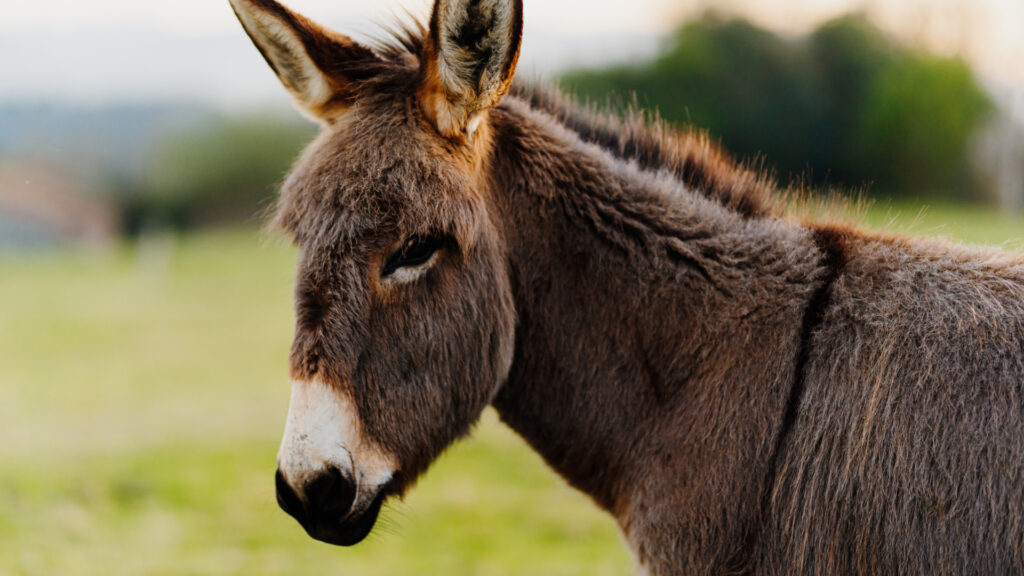
A Donkey’s Vision
Read This Week: Numbers 22
Balaam got up in the morning, saddled his donkey, and went with the Moabite officials. But God was very angry when he went, and the angel of the Lord stood in the road to oppose him. Balaam was riding on his donkey, and his two servants were with him. When the donkey saw the angel of the Lord standing in the road with a drawn sword in his hand, it turned off the road into a field. – Numbers 22:21-23 NIV
A pagan prophet, a talking donkey, and a king desperate to control outcomes. Numbers 22 is a compelling chapter with a practical message about vision, influence, obedience, godly vision, and how hearts can drift even when words sound right.
Balak, king of Moab, sees Israel not just as a neighbor but as a threat. Instead of confronting them, he seeks control by trying to manipulate them spiritually, calling on Balaam, a prophet known for blessing or cursing, to leverage spiritual authority for gain. Our first takeaway from this is that fear often drives people to control what they cannot trust. In leadership, business, and life, uncertainty tempts us to grasp for control rather than lean into faith and clarity.
Balaam’s role is where things get even more personal. Initially, he does the right thing. When asked to curse Israel, he seeks God and receives a clear answer: You must not put a curse on those people. It’s decisive and unmistakable. But when a second, more prestigious offer comes with more money, more influence, and more recognition, Balaam pauses again. This is where the story shifts from external pressure to internal conflict. Balaam’s words remain spiritual, but his heart begins to entertain what God told him not to do.
That tension is relevant. We don’t often blatantly disobey, but we revisit decisions God has made clear, tempted by better offers like more opportunity, visibility, or upside. The issue isn’t just rebellion; it’s rationalization. We negotiate with clarity. Balaam’s story warns us that delayed obedience and reopened questions reveal that our desires may be competing with our convictions.
God allows Balaam to go, not so that he will get approval, but so he’ll be exposed. On the journey, Balaam faces resistance from an unexpected source: his donkey, who sees what Balaam cannot. Three times the animal stops before the angel of the Lord; three times Balaam responds with frustration and force. This is ironic because the one meant to see is blind, while the overlooked, unexpected one sees clearly. A donkey’s vision was clearer than Balaam’s.
The lesson here seems to be that when misaligned, we lose perspective, become irritated by obstacles, forsake our faith, and may even fight against what’s meant to protect us. Frustrations and delays may actually shield us from harm or realign us with God’s will and His purposes for our lives.
When Balaam’s eyes are opened, he realizes how close he came to destruction. It’s a humbling moment that shows awareness often follows resistance. Still, Father God offers grace. He corrects and redirects Balaam, and He does the same for us. The Lord is merciful and faithful and works to bring clarity and show us the right path, even when we stray.
This begs a few questions: Where do we seek to control out of fear? Are we reopening settled decisions because new opportunities appear? Are frustrations really guidance or protection? Numbers 22 encourages us to remember that spiritual language and traditions aren’t the same as spiritual devotion and submission to the Holy Spirit. Balaam’s divided heart, despite saying the right things, becomes the real tension. It is being obedient to God’s word, even when it is uncomfortable and may cost us.
Living this out means choosing faithfulness over opportunity, obedience over advantage, and trust over control. Ultimately, the Scriptures urge us to have consistency between our actions and hearts, as peace and clarity often come when we seek the Lord and pay attention to what holds us back.