
Hearing God Again
Read This Week: Deuteronomy 5
Hear, Israel, the decrees and laws I declare in your hearing today. Learn them and be sure to follow them. The Lord our God made a covenant with us at Horeb. It was not with our ancestors[a] that the Lord made this covenant, but with us, with all of us who are alive here today. – Deuteronomy 5:1-3 NIV
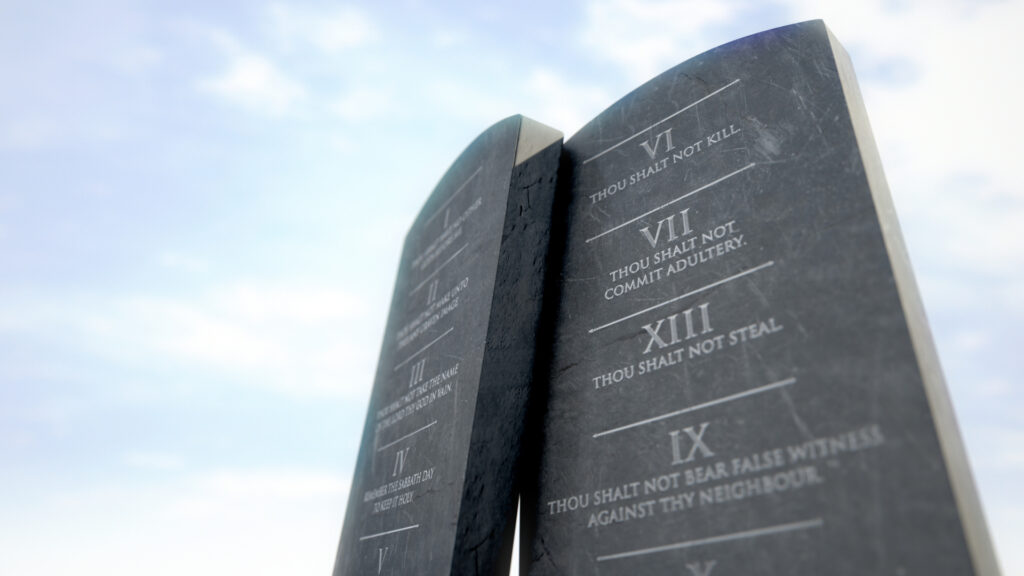
Most everyone has heard of the Ten Commandments, but many probably don’t know the context of Deuteronomy 5, which marks the defining moment when Israel receives God’s laws. Moses gathers the people and reminds them of the covenant the Lord made with them at Horeb. Moses does so because he is now speaking to a new generation. Many of those who first stood at Sinai have died in the wilderness, yet the word of God powerfully lives on.
The covenant needs to be heard again. Moses tells Israel, The LORD our God made a covenant with us at Horeb. It was not with our fathers that the LORD made this covenant, but with us (v. 2–3). This reminds us that faith is not inherited. We may grow up hearing Scripture, attend church, or come from a godly family, but every generation must personally hear and respond to God and the Gospel.
The Ten Commandments were not and are not arbitrary rules imposed upon an otherwise reluctant people. Before God tells Israel how to live, He reminds them who He is and what He has done: I am the LORD your God, who brought you out of the land of Egypt, out of the house of slavery (v. 6). Here, we see that God’s sovereignty and His grace come before His commandment. The Lord has already acted to redeem His people, and their obedience is a response to that redemption.
This pattern is important for us as Christians too. We do not obey God to persuade Him to love us; we learn to obey because, in Christ, we have encountered His grace. Biblical obedience is not an attempt to earn a relationship with God but the grateful response of people who have already received His mercy and salvation.
The commandments themselves reveal that God cares about every dimension of human life. The first commands concern our relationship with God: we are not to have other gods, make idols, misuse His name, or forget the Sabbath. The remaining commands move naturally into our relationships with other people: honoring parents, protecting life, faithfulness in marriage, respecting possessions, telling the truth, and refusing to want something that isn’t ours.
There is a strong theological unity in this passage with God’s laws. Loving God cannot be separated from how we treat people. Worship that never changes our relationships is empty, while morality detached from God eventually loses its foundation. Deuteronomy 5 therefore presents holiness as something that reaches into ordinary life—our homes, marriages, speech, work, desires, possessions, and use of time.
The command to keep the Sabbath is worth highlighting as well. Israel is told to remember that they were enslaved people in Egypt and that God brought them out with a mighty hand and an outstretched arm (v. 15). Sabbath is therefore more than a command to stop working; it is a declaration of freedom. Slaves are defined by endless labor and the demands of their masters. God’s people, however, are invited to slow down and trust Him. Sabbath-like rhythms remind us that we are not machines and that our value does not come from how much we accomplish. Rest becomes an act of faith: God remains faithful even when we stop working.
Perhaps the most searching command in the chapter is the final one: You shall not covet (v. 21). Unlike murder, adultery, or theft, coveting often remains hidden from everyone except God. It concerns the inner life, the desires that quietly tell us that what God has given us is not enough. This shows something important about biblical holiness: God is not merely interested in outward behavior. He wants to transform the heart. We can appear respectable while being consumed by envy, comparison, resentment, or an insatiable desire for more. The command against coveting calls us to examine not only what we do but also what we love and what we believe will satisfy us.
Moses ends the section by urging Israel to walk in all the way that the LORD your God has commanded you (v. 33). The image is not simply of knowing a list of commandments but of walking a particular way through life. God’s truth is meant to become a path. The question is not so much, “Do I know the Ten Commandments?” but, “What kind of person am I becoming as I follow God?” Do my priorities demonstrate that God is first? Does my speech reflect truth? Do my relationships show honor and faithfulness? Do I know how to rest? Am I content with what God has given me, or am I constantly comparing my life with someone else’s?
Deuteronomy 5 ultimately calls us to hear from God again and again; to run back to Him who is both holy and gracious. His commands reveal His character and His vision for human flourishing, while His redemption reminds us that obedience begins with grace. For Christians, these truths find their fullest expression in Jesus, who does not merely give us commandments but calls us to follow Him through the power of the Holy Spirit.
The aim is not conformity on the outside but a transformed heart that increasingly desires what Father God desires. Therefore, we must listen again to remember who God is, what He has done, and to allow His word to shape the ordinary decisions of our lives. The Old Testament covenant becomes a present invitation: walk with God, trust His wisdom, and discover that His ways are not merely restrictions on life but the pathway toward the one He intended.
SUNDAY PODCAST
This Week with God: Deuteronomy 5
The Message: https://reachchurch.org/wp-content/uploads/2026/08/20260816message.wav
Worship Songs:
Speak O Lord
As For Me and My Home
What influence did your family have on you? Was it a good influence—or not so good?
I know for me, I was raised in a loving home, even though it wasn’t a home of worship and church.
Later on, it was actually my brother who led me to the Lord. Then my mom came to know Jesus, along with both of my sisters and my father as well.
But each one of us had to find God individually.
And I think that is true for all of us. God is looking to have a personal relationship with each person individually, whether we were raised knowing Him or not.
1. Make Your Relationship With God Personal
Israel could not live on the faith of the generation before them. They had to hear God’s Word, learn it, and choose to obey it for themselves.
You cannot live on someone else’s relationship with God. At some point, you must choose Him for yourself.
2. Give God First Place in Every Part of Your Life
The Ten Commandments begin with honoring God, but they continue into family, marriage, business, truthfulness, and even the private desires of the heart.
When God truly has first place, it changes how we worship, work, rest, speak, and treat people.
3. Give God Your Heart, Not Just Your Words
Israel promised to obey, but God said, “Oh, that they had such a heart in them.” He was not merely looking for an emotional promise; He wanted lasting devotion.
God does not only want us to say the right things. He wants a heart that will continue walking with Him.
Deuteronomy 5 — Hear, Learn, and Live It
As the Israelites stood preparing to enter the Promised Land, Moses spoke to a new generation. He reminded them of Father God’s covenant and called them to listen carefully to His Word.
Deuteronomy 5:1 AMP
“Hear, O Israel, the statutes and ordinances which I am speaking today in your hearing, that you may learn them and observe them carefully.”
There are three important things here:
Hear. Learn. Live it.
Father God never intended for His Word to simply be something we hear. He wants us to learn His ways and allow His Word to change how we live.
Before reminding Israel of the commandments, Father God reminded them of what He had already done:
Deuteronomy 5:6 AMP
“I am the LORD your God who brought you out of the land of Egypt, out of the house of slavery.”
God had already rescued them.
They weren’t obeying so God would love them. They were learning to obey because He already loved them, had rescued them, and had shown Himself faithful.
His commands were not meant to keep something good from them. Father God was teaching His people how to live close to Him and how to live rightly with one another.
Then we see what Father God truly desired:
Deuteronomy 5:29 AMP
“Oh that they had such a heart in them always, that they would fear Me and keep all My commandments…”
He wanted their hearts. And He still does.
We can go to church, read our Bible, pray, and know Scripture, but Father God desires a relationship with us. Prayer is talking with Him, but relationship also means learning to listen.
What is Father God saying to me through His Word?
And how am I going to respond?
Deuteronomy 5:33 tells us to “walk” in the way Father God has commanded.
I love that picture: Walk with Him.
Not only on Sunday.
Not only when life is difficult.
Not only when we need something.
Every day.
Choosing life means choosing to walk with Father God—hearing Him, learning His ways, trusting Him, and responding to what He says.
His Word isn’t meant to keep us from life.
His Word teaches us how to live.
Hear Him.
Learn His ways.
Live what He teaches you.
Walk with Him.
That’s choosing life. ❤️
A Prayer You Can Pray
Father God,
Thank You for loving us and for Your Word that teaches us Your ways and shows us Your heart.
Help us not only to hear Your Word, but to learn it and live it. Give us hearts that truly desire You and help us always put You first.
Teach us to listen to You through Your Word and to respond with obedience. We don’t want to simply know about You—we want to know You, walk with You, and grow closer to You every day.
Help us carry what we learn into our homes, families, relationships, and everywhere we go. Let others see Your love through the way we live.
Father God, help us choose life every day.
We love You, Father God, Jesus, and Holy Spirit. ️✨❤️